

NTNU RCEMI Builds a Cross-Institutional Faculty Learning Network
The Resource Center for EMI at National Taiwan Normal University (NTNU RCEMI) partnered with seven universities from April to May to organize 17 cross-institutional open English as a Medium of Instruction (EMI) class observations and post-observation discussions. These sessions aim to advance professional exchange and development in EMI in higher education.
Participating institutions included Kaohsiung Medical University, Feng Chia University, Tzu Chi University, Fu Jen Catholic University, National Chung Cheng University, National Taiwan University, and Chung Hwa University of Medical Technology. Covering fields such as the humanities, medicine, engineering, business and management, design, and education, the program used class observations, teaching consultations, AI-focused teaching lectures, and roundtable forums to foster inter-university faculty learning and the sharing of EMI teaching practices.
Professor Mei-Hui Liu, Chief Executive Officer of RCEMI, shared that the series offered faculty members valuable opportunities to enter EMI classrooms across different disciplines. Through direct observation of course design, classroom interaction, student participation, and language-support strategies in authentic teaching settings, participants were able to reflect on their own teaching practices with guidance and feedback from EMI specialists, further strengthening the quality of EMI courses.
Diverse Disciplines Demo EMI Teaching
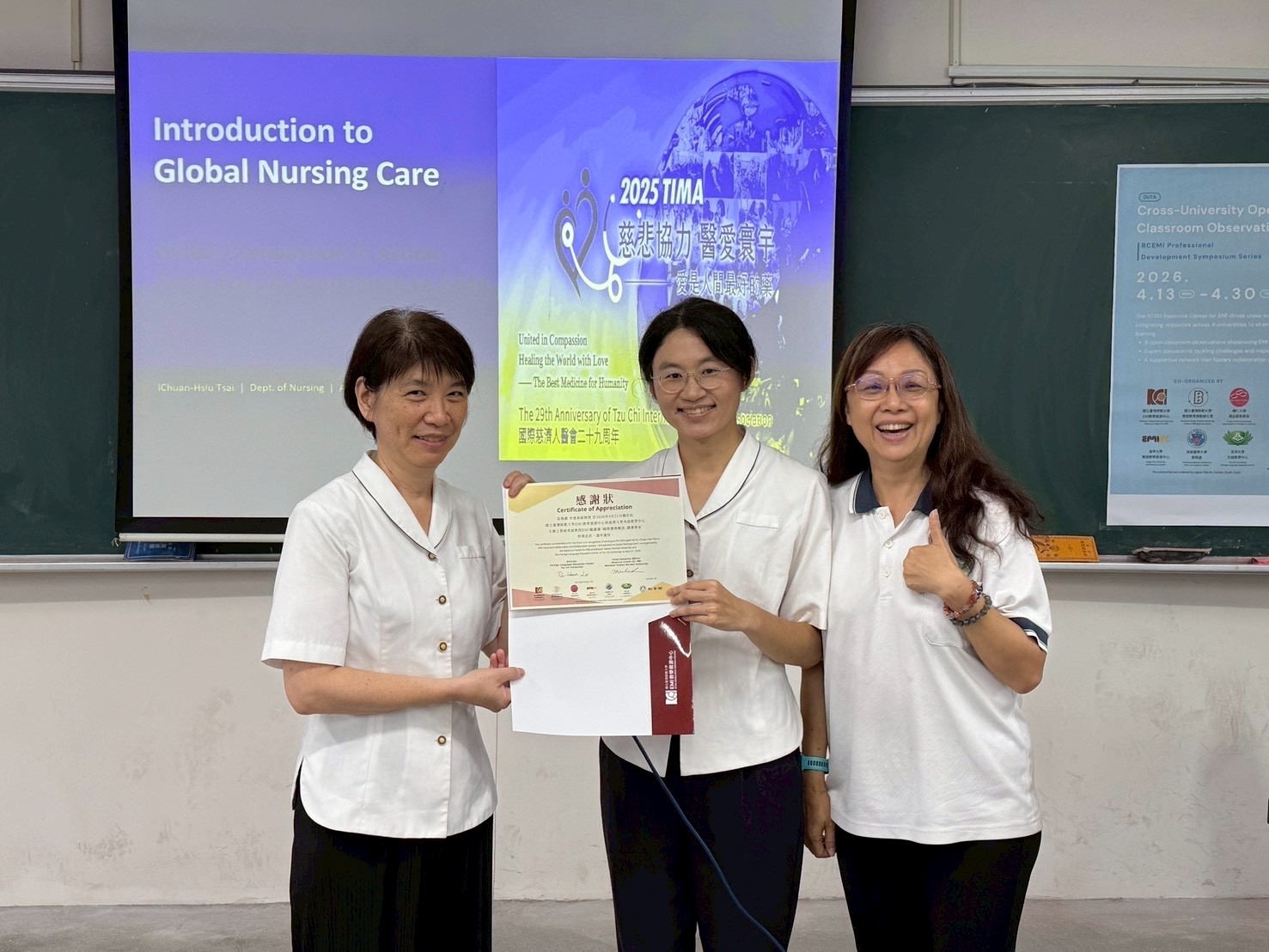
The open class observations covered a wide range of subjects. Together, they demonstrated the diverse ways EMI teaching can be adapted to different disciplinary contexts. At Kaohsiung Medical University, the course “Selected Topics in Basic Biostatistics” used case analysis and data interpretation activities to guide graduate students in discussing biostatistics and research design in English, highlighting the depth and professionalism of EMI in medical education. Feng Chia University’s “International Financial Markets and Investment” course adopted a highly interactive teaching design to engage students in a large-class setting. Tzu Chi University’s “Introduction to International Nursing” integrated digital tools and interactive activities to help students connect professional knowledge with English communication.
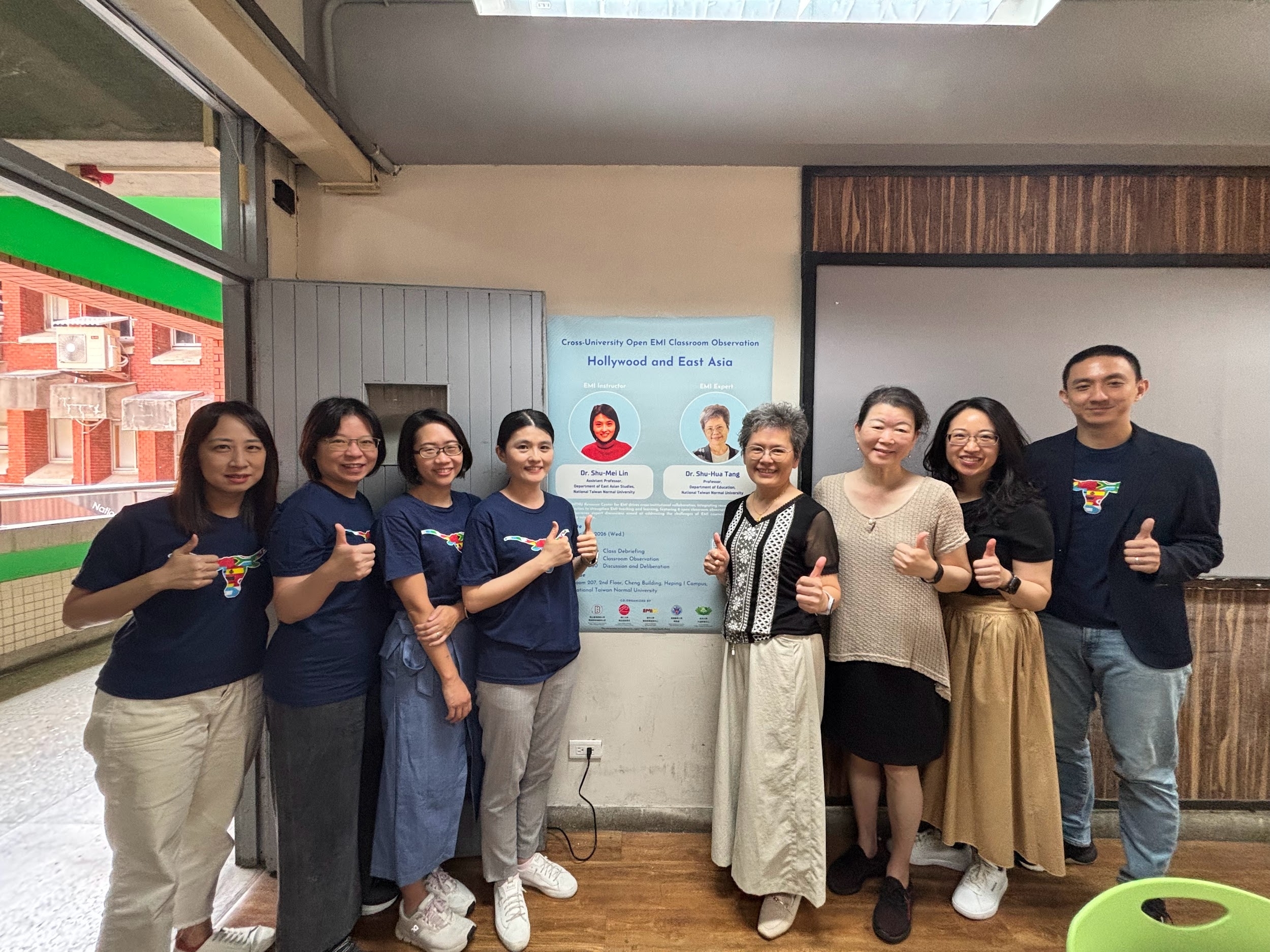
At NTNU, the course “Hollywood and East Asia” centered on film-text analysis and cross-cultural discussion, demonstrating the distinctive features of EMI teaching in the humanities. By observing classrooms across disciplines, participating faculty members gained practical insights into how EMI courses can be designed to support both content learning and language development in response to different academic fields.
AI Applications Emerge as a Key Focus of Faculty Exchange
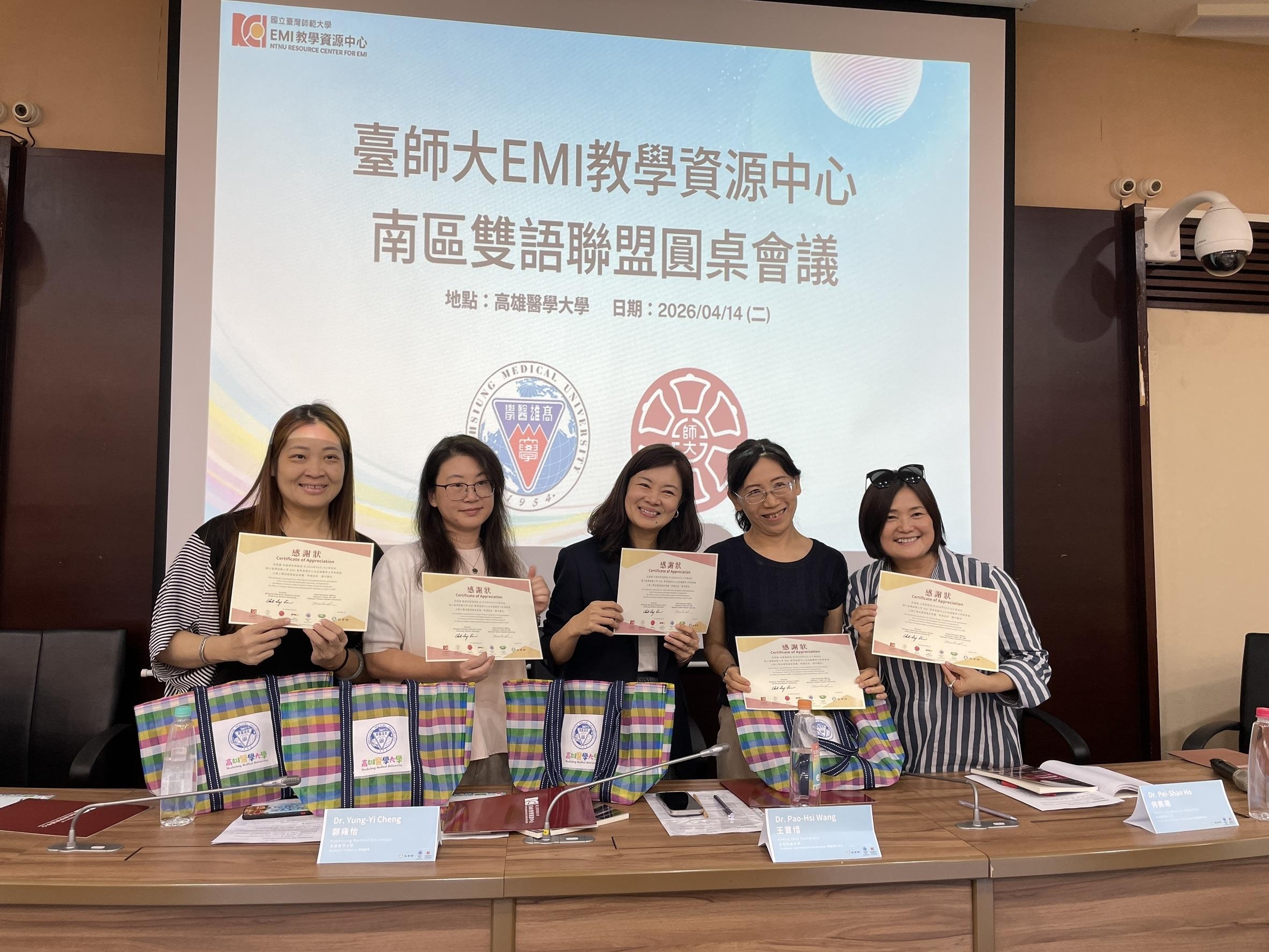
In addition to open class observations, the program responded to growing interest in the use of AI and digital tools in higher education. Kaohsiung Medical University hosted an in-person session for the Southern Taiwan Bilingual Education Alliance, combining EMI class observations with an AI teaching workshop and roundtable forum to encourage faculty exchange across institutions in southern Taiwan. Feng Chia University also hosted a Central Taiwan Bilingual Education Alliance session, expanding the depth and scope of professional dialogue through observation, post-observation discussion, and an AI-focused lecture.
One of the workshops’ focus was on AI-assisted teaching, critical thinking development, and learning task design. Participants explored how AI tools can be used to enhance student engagement and teaching effectiveness in EMI classrooms. The roundtable forums invited faculty members to share experiences in EMI training, classroom practice, and professional learning communities, while also discussing teaching transformation and future support needs. The sessions’ structure encouraged deeper professional dialogue and collaboration among teachers across disciplines and regions.
Strengthening Cross-Institutional Faculty Learning and Professional Support
Associate Executive Officer Ya-Chu Fan of RCEMI stated that the 17 cross-institutional open EMI class observations reflected the strong commitment of higher education faculty to continuous teaching improvement and inter-university collaboration. She emphasized that the core value of the open class observations is to build a sustainable faculty learning network through real classroom observation, professional feedback, and experience sharing.
Looking ahead, RCEMI will continue to work with universities across Taiwan to promote cross-institutional class observations, AI teaching workshops, and faculty professional learning communities. Through these initiatives, RCEMI aims to help faculty accumulate EMI teaching experience, deepen collaboration among institutions, and jointly enhance the quality of bilingual education in Taiwan’s higher education system.