

NTNU’s First Class of University Interdisciplinary Bachelor Program Showcases Personalized Studies
National Taiwan Normal University (NTNU) marked a new milestone in student-centered higher education with the graduation of the first students from its University Interdisciplinary Bachelor’s Degree Program (UIBP). The program reflects NTNU’s ongoing efforts to advance interdisciplinary learning, personalized academic planning, and talent cultivation for a rapidly changing global society.
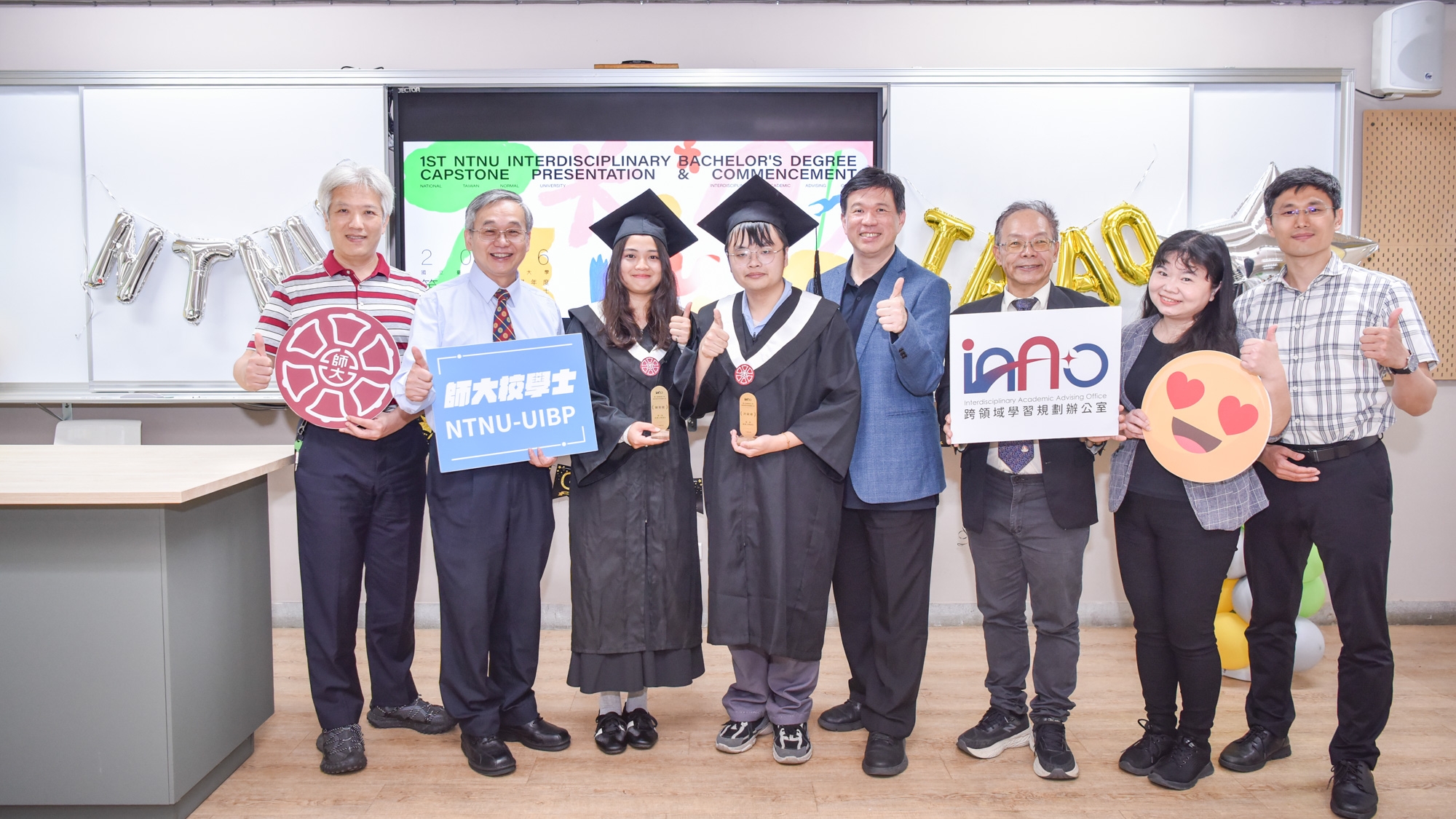
At the University Interdisciplinary Bachelor Degree Program Capstone Presentation & Commencement held on 2 June, NTNU’s first two UIBP graduates presented their capstone projects and shared their learning journeys. Executive Vice President Hsueh-Chih Chen conferred the ceremonial tassels, symbolizing the University’s progress in supporting students to design individualized degree pathways beyond the boundaries of traditional departments.
Launched in the 2024 academic year, NTNU-UIBP is a response to the growing need for graduates of higher education who can integrate knowledge across disciplines, adapt to emerging technologies, and address complex social challenges. The program allows students to combine minors, credit programs, and interdisciplinary modules according to their interests, abilities, and career goals. To support this process, NTNU has established the Interdisciplinary Academic Advising Office, which provides academic advising, professional consultation, learning guidance, and mentorship from industry experts.
Executive Vice President Chen stated that NTNU has long emphasized self-directed learning and interdisciplinary development. Through UIBP, students are encouraged not only to acquire knowledge, but also to define their own learning directions. The graduation of the first cohort, he said, demonstrates both the initial success of the program and the students’ courage to explore new academic possibilities.
Associate Vice President for Academic Affairs Wei-Ta Fang further emphasized that the program’s greatest value lies in helping students connect knowledge and experience from different fields. Through project-based learning and public presentations, students transform academic exploration into concrete action and innovation, putting NTNU’s learner-centered educational philosophy into practice.
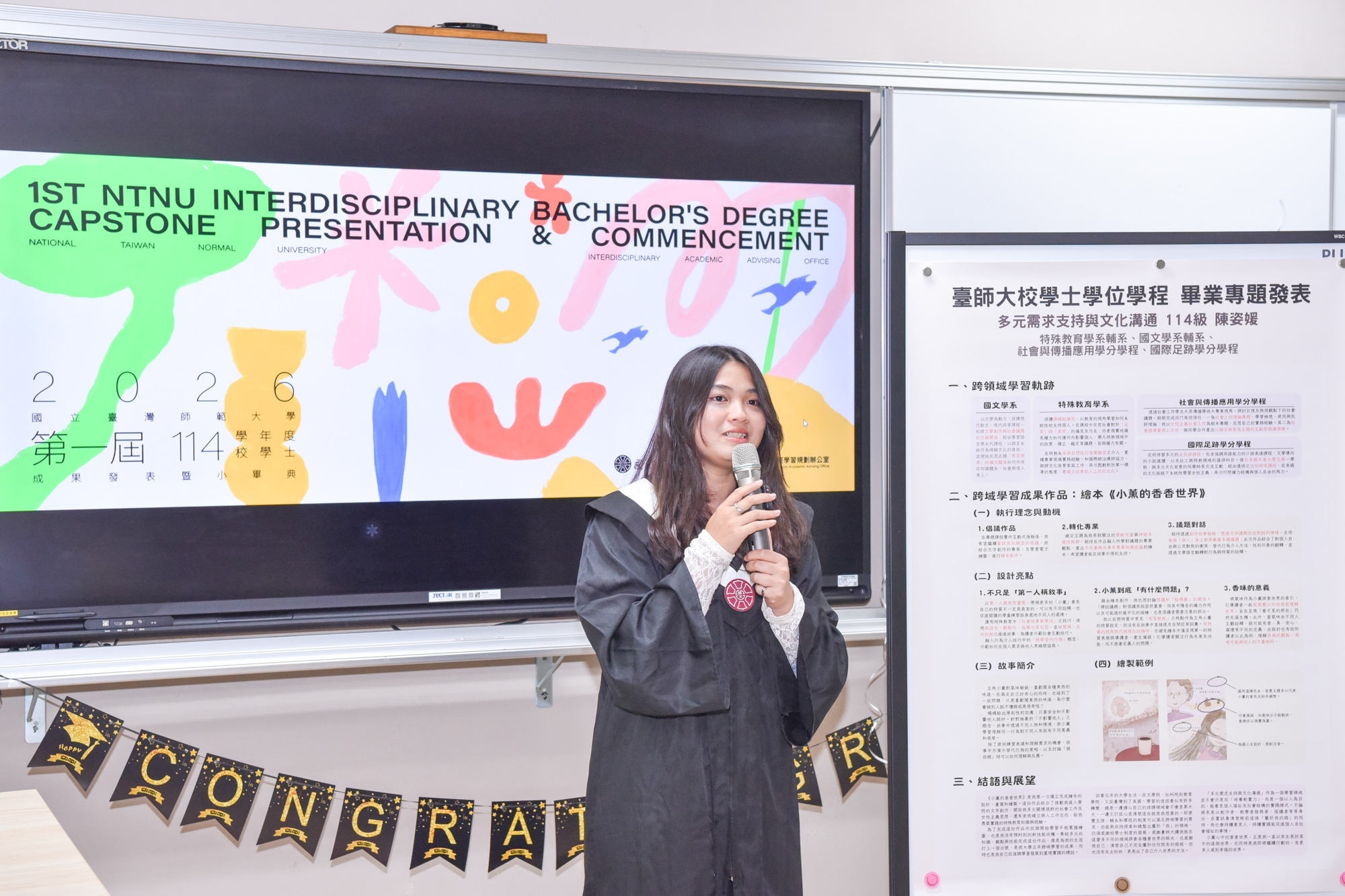
One of the first graduates, Tzu-Yuan Chen, designed her academic field as “Support for Diverse Needs and Cultural Communication.” Originally a student in the Department of Chinese, she integrated studies in special education, literature, social and communication applications, and NTNU’s Global Footprint Program. Her interdisciplinary pathway brought together literary creation, special education, social advocacy, and cross-cultural understanding.
Chen’s capstone project, Little Hsun’s World of Good Smells, is an original picture book inspired by special education concepts. The story follows Little Hsun, a girl with a particularly sensitive sense of smell, and invites readers to respect individual differences and reflect on social boundaries. Drawing on “social stories” and alternative behavior strategies from special education, the work presents diverse traits without labeling, encouraging children to recognize their own unique value while also challenging mainstream assumptions about what is considered “normal” or “different.” Chen said the project brought together five years of learning in literature, social work, feminist thought, and special education. NTNU-UIBP enabled her to reconnect knowledge and experience that once seemed scattered, helping her identify a clearer direction for future work in helping professions and social advocacy.
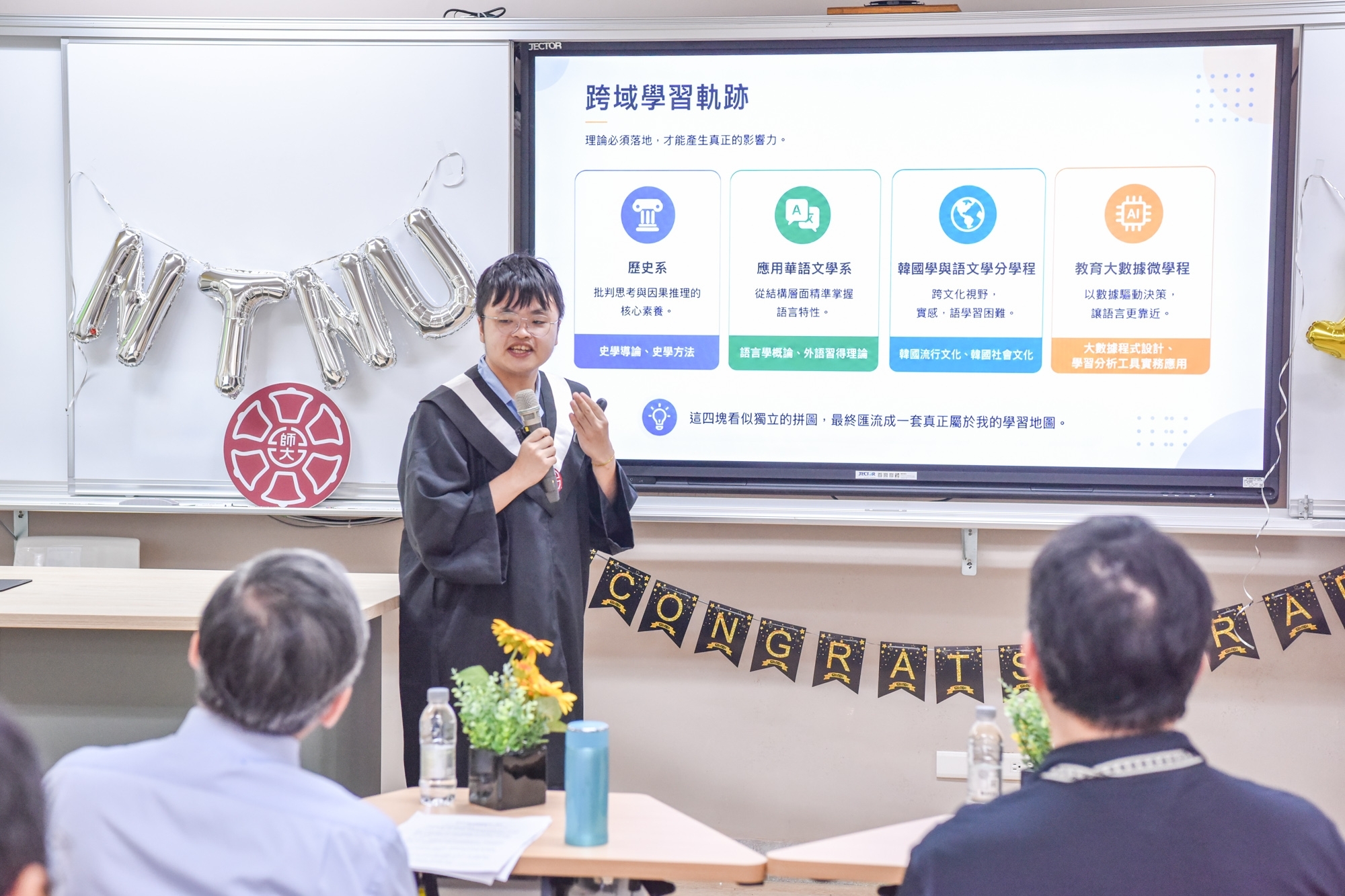
UIBP's other graduate, Chia-Wei Hsu, created a field titled “Language Technology and Smart Applications.” Originally from the Department of History, Hsu combined coursework in Chinese as a Second Language, Korean studies and language, and educational big data. His academic pathway reflects the growing convergence of language education, artificial intelligence, and data analysis.
Hsu’s capstone project focused on building an AI-assisted language learning system using authentic news texts as learning materials. The system applies natural language processing, automated speech generation, and knowledge graph analysis to help learners better understand vocabulary and grammatical structures. It also incorporates gamified learning design, integrating news reading, vocabulary review, listening practice, and assessment into a single platform. The project aims to create an intelligent learning environment that supports both learning outcomes and learner motivation. Hsu said the greatest benefit of the program was the opportunity to move beyond conventional disciplinary boundaries and reconsider the connections among history, the humanities, language technology, and data analysis. Each stage of exploration helped him clarify his future direction and strengthened his belief that interdisciplinary learning can generate new possibilities.
From an advocacy-oriented picture book on neurodiversity to an AI-powered language learning system, the achievements of NTNU’s first University Interdisciplinary Bachelor Program graduates demonstrate the educational value of interdisciplinary integration and self-directed exploration. Their work also reflects NTNU’s commitment to preparing students with global perspectives, social responsibility, and the capacity to respond creatively to future challenges. Looking ahead, NTNU will continue to strengthen UIBP and its interdisciplinary support mechanisms by expanding course options, professional advising, and practical learning resources. Through these efforts, the University aims to guide more students from exploration to practice, helping them develop distinctive academic identities and meaningful pathways for their future.