

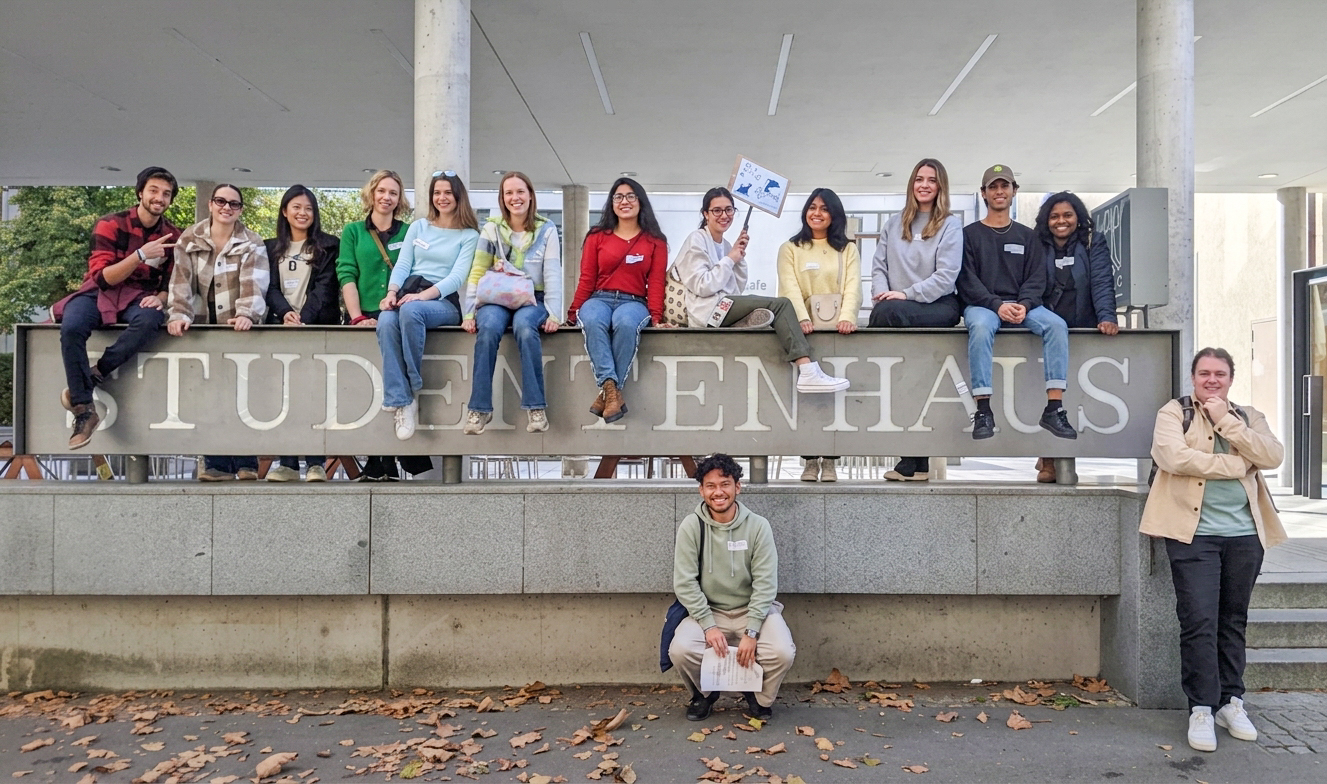


NTNU Student Exchanges to Germany Reach Record High: A Guide to Popular Universities and Affordable Study Abroad
Studying abroad through exchange programs has become an important way for students to broaden their international perspectives, develop independence, and strengthen cross-cultural communication skills. To encourage students to explore the world, National Taiwan Normal University (NTNU) has actively promoted campus internationalization and expanded opportunities for overseas exchange. In recent years, Germany, with its strong academic tradition and diverse culture, has emerged as one of the most popular European exchange destinations among NTNU students. Applications for NTNU’s university-level exchange programs in Germany for the 2026–2027 academic year have also driven participation to a new high.
Expanding Partnerships: Exchange Opportunities at 10 German Universities
To provide students with more diverse and high-quality options, NTNU has actively expanded its academic partnerships with German higher education institutions in recent years. Within just three years, the number of German universities participating in university-level exchange partnerships with NTNU has increased from four to ten.
New partner universities include Georg-August-Universität Göttingen, Goethe University Frankfurt, Ruhr University Bochum, and Technical University of Darmstadt, which joined in 2023, as well as Universität Konstanz and the University of Münster, which joined in 2024. The expansion has not only increased exchange opportunities for students interested in studying in Europe but also broadened cooperation across business and management, science and engineering, the humanities, education, sports, and the arts, providing students from different academic backgrounds with more options for international academic exchange.
Top German Exchange Destinations Among NTNU Students
As NTNU’s network of German partner universities has expanded, students have increasingly selected exchange destinations based on academic interests and the strengths of individual institutions.
Among the five most popular destinations, Julius-Maximilians-Universität Würzburg ranks first. With a wide range of courses taught in English and German and ample exchange places, the university has attracted a total of 30 NTNU student exchanges and is particularly popular among students from the College of Education and College of Science.
Heidelberg University follows closely behind and has long been a popular academic destination for students from NTNU’s College of Liberal Arts and College of International Studies and Social Sciences. All NTNU students who have studied there through the exchange program chose to stay for a full academic year.
Freie Universität Berlin, located in the German capital and surrounded by rich metropolitan cultural resources, is another popular first choice among students in the humanities and sciences. University of Münster, which became a partner in 2024, quickly rose to fourth place and has become an important destination for students from NTNU’s College of Sports and Recreation and College of Arts seeking both academic and practical training.
Several universities share fifth place, each offering distinctive academic strengths. Technical University of Darmstadt is particularly attractive to students in science and engineering, while Goethe University Frankfurt, located in one of Europe’s major financial centers, is popular among business and management students. Ruhr University Bochum has become an important destination for students in Chinese as a Second Language and East Asian studies, while Georg-August-Universität Göttingen attracts students from the Colleges of Science, Education, and International Studies and Social Sciences.
Practical Tips from German Exchange Students
Beyond academic opportunities, students are also interested in how to make studying and living in Germany more affordable. In May, NTNU’s Office of International Affairs held an exchange student sharing session, inviting students from German partner universities who were studying at NTNU to share practical advice based on their own experiences.
Samira Lara Schulte from Ruhr University Bochum noted that eating out in Germany can be expensive. University cafeterias, which offer affordable meals and a variety of choices, can therefore help students save considerably on daily expenses. She also recommended making good use of student semester transportation passes, which allow students to travel on public transportation and provide a convenient way to explore different cities.
For accommodation and everyday expenses, Yeabsera Dereje from the University of Bayreuth recommended applying early for shared apartments through housing platforms such as WG-Gesucht. Sharing an apartment not only helps reduce rent but also provides opportunities to become more involved in local life and practice German. Cooking at home with groceries from affordable supermarket chains such as ALDI and LIDL can further reduce living expenses.
Yvonne Stirner from Julius-Maximilians-Universität Würzburg also encouraged exchange students to make full use of their student ID cards and International Student Identity Cards (ISIC). Museums, opera houses, and art galleries across Germany often offer student discounts, with some even providing free admission.
NTNU is committed to creating more opportunities for students to connect with the world. Students interested in overseas exchange programs and NTNU’s German partner universities can find further information through the Office of International Affairs’ Outgoing Exchange Student System: https://bds.oia.ntnu.edu.tw/bds/OE