

NTNU and Charles University Strengthen Taiwan–Czech Research Ties through Earth Sciences Workshop
NTNU Associate Professor Wei-Ling Tseng of the Department of Earth Sciences led the 2026 Taiwan–Czech Joint Workshop for Young Earth Scientists from September 14 to 22. Supported by the University Academic Alliance in Taiwan (UAAT), the workshop welcomed Vojtěch Patočka of the Department of Geophysics at Charles University and six graduate students from the university’s Department of Geophysics and Department of Atmospheric Physics.
The weeklong program brought together faculty members and students from NTNU and Charles University for academic discussions, geological field trips, laboratory visits, and visits to national research institutions, strengthening connections between young researchers in Taiwan and the Czech Republic.
Advancing Research Dialogue in Earth and Planetary Sciences
Academic activities began on September 15 and 16 at NTNU’s Gongguan Campus. Following introductions to the two universities’ academic programs, the Charles University team presented research covering planetary geology, numerical modeling of street-canyon ventilation, cooling magma reservoirs, snow-surface analysis and microwave radiance data assimilation, earthquake rupture inversion, and thermal processes in the subsurface ocean of Saturn’s moon Enceladus.
NTNU faculty members and students presented their research the following day, covering topics including extreme rainfall variability in Southeast Asia, the effects of tropical deforestation on monsoons, repeating earthquakes in Taiwan and Chile, and near-source earthquake characteristics.
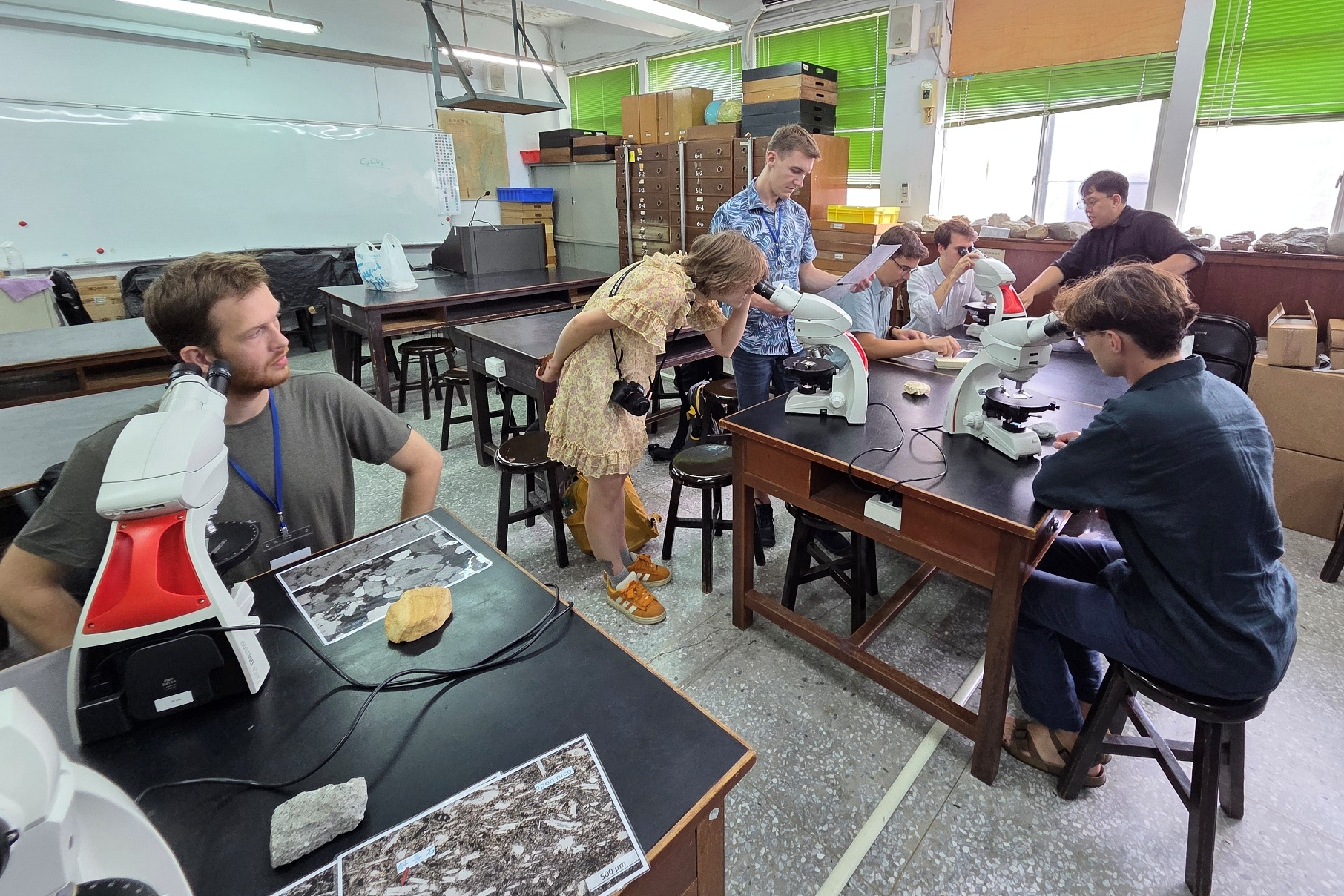
They also visited Associate Professor Yu-Ming Lai’s rock sample analysis laboratory and Professor Meng-Wan Yeh’s argon-argon dating laboratory. Associate Professor Wei-Ling Tseng later led a visit to the NTNU Observatory, providing further opportunities for discussion across different areas of Earth and planetary sciences.
Exploring Taiwan’s Geological Landscape
On September 17, Associate Professor Yu-Ming Lai led the Taiwan–Czech group to Yangmingshan National Park and the Taiwan Volcano Observatory, where participants met with researchers involved in monitoring magma reservoirs and volcanic gases. They also visited Lengshuikeng, Xiaoyoukeng, and Liuhuanggu to examine post-volcanic geological features firsthand.
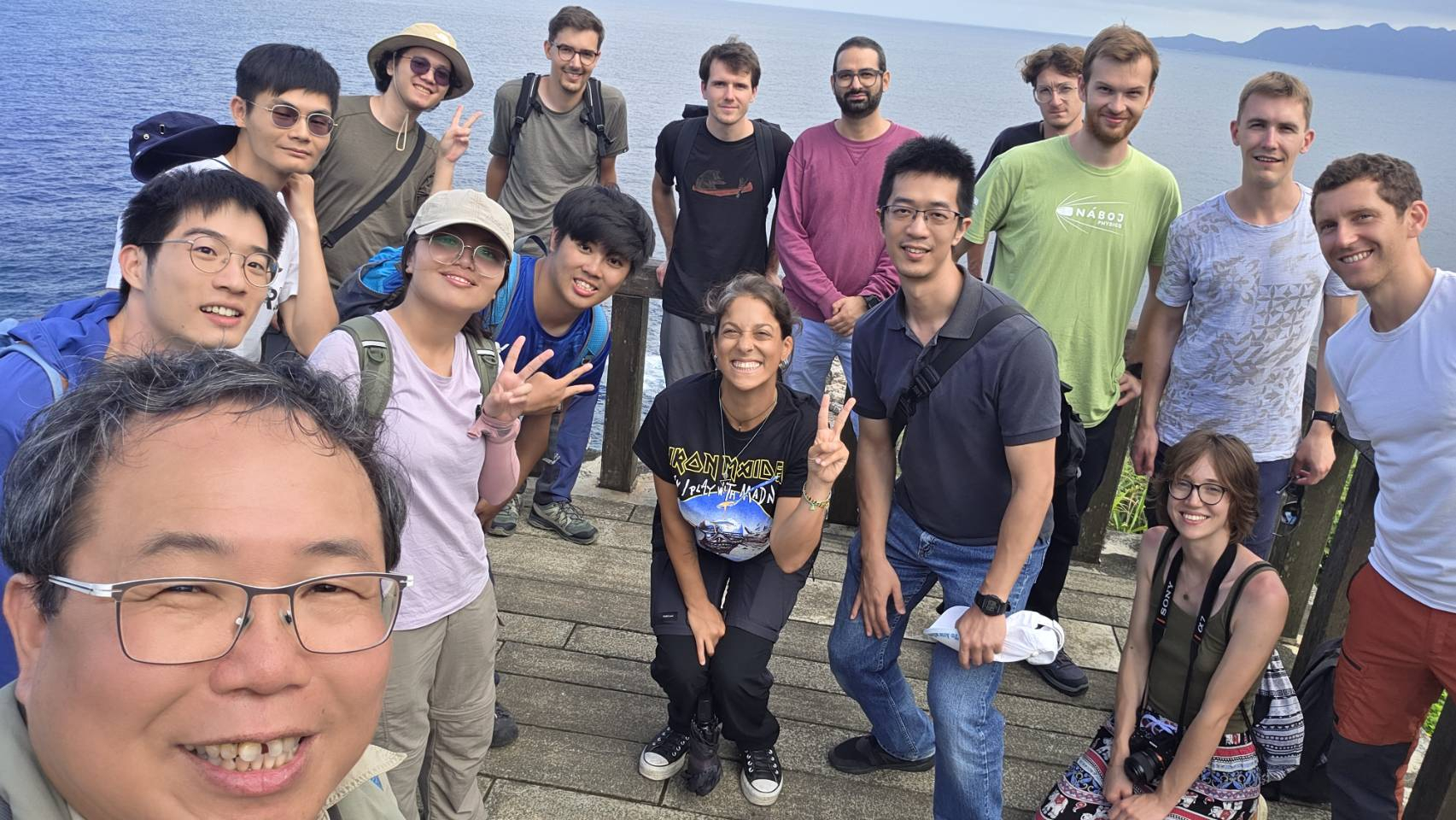
On September 18, Associate Professor En-Chao Yeh led the group to Taiwan’s northeastern coast. The field trip included visits to the Yin Yang Sea at Shuinandong and the Jinguashi area to examine mineral veins and their relationship with local history. Participants also visited the La La rock dike to discuss igneous intrusions and field observation, Longdong Cape to examine some of northern Taiwan’s oldest rock formations, and the distinctive weathering formations at Nanya.
The fieldwork gave the visiting students and researchers an opportunity to experience Taiwan’s geological diversity within a relatively compact region and connect field observations with their academic research.
Connecting with Taiwan’s National Research Institutions
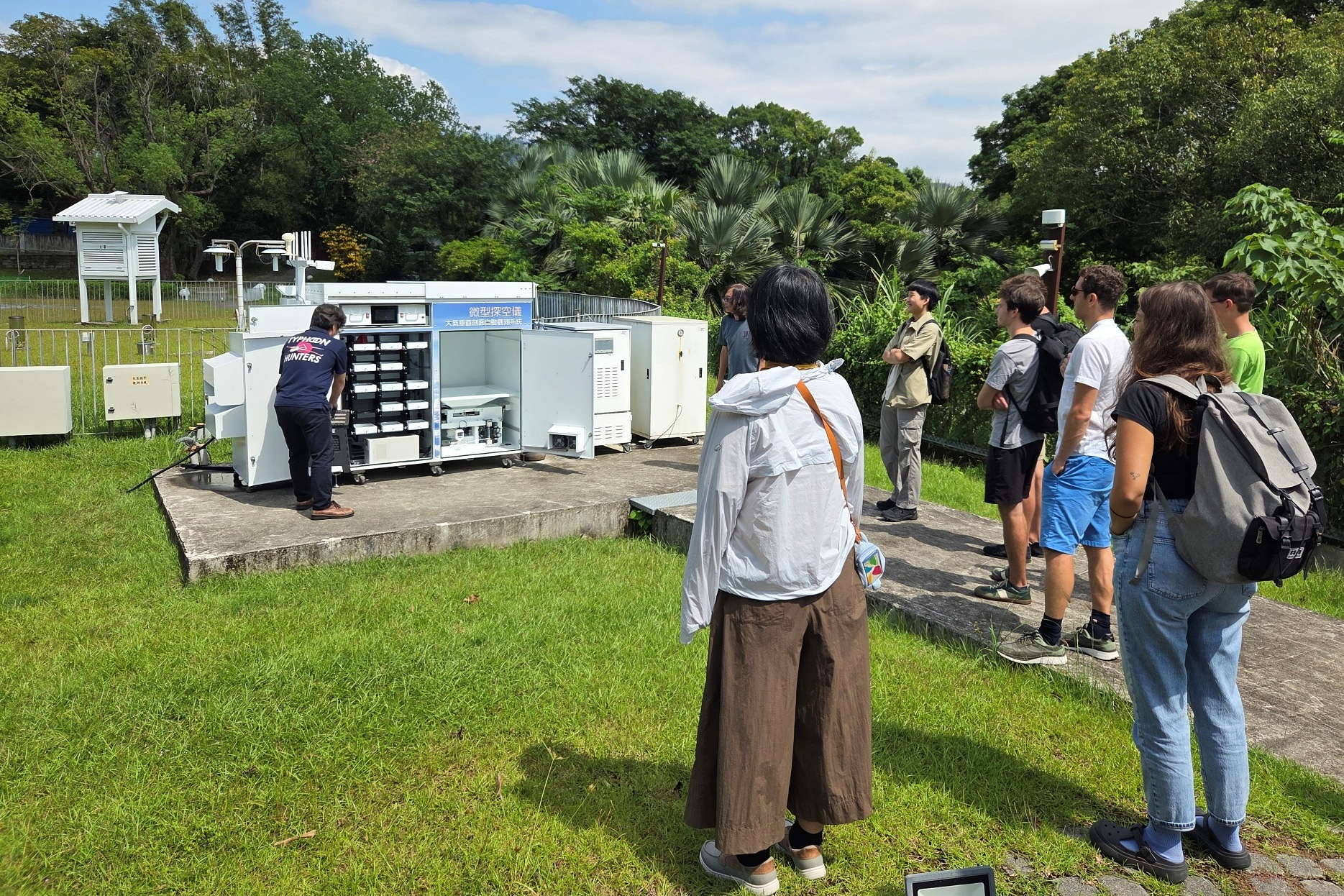
On September 21, the group visited the New Taipei Weather Park, where Chung-I Hsu, Chief of New Taipei Weather Station, welcomed the delegation and introduced Taiwan’s nationwide meteorological observation network and the station’s facilities, including the Minisonde developed by a Taiwanese research team.
At the calibration center, participants learned about the internal structures and calibration processes of instruments including rain gauges, barometers, thermometers, and sunshine recorders. The group also toured the center’s recently upgraded wind tunnel laboratory. Later that day, the delegation traveled to Hsinchu to visit the Taiwan Space Agency (TASA). Participants toured satellite assembly and testing facilities and learned about the rigorous testing procedures satellites undergo before launch. They also viewed FS-8B, the second FORMOSAT-8 satellite, during its testing process.
Tien-Chuan Kuo, Deputy Director General of TASA, then joined the Taiwan–Czech group for a Q&A session. The discussion gave the Charles University delegation an opportunity to learn more about Taiwan’s latest developments in remote-sensing satellites, meteorological satellites, and space technology.
Building Long-Term Taiwan–Czech Research Connections
Tseng said the support of UAAT enabled young researchers from Taiwan and the Czech Republic to engage directly with one another while giving the visiting scholars firsthand experience of Taiwan’s strengths in Earth and planetary sciences.
The Department of Earth Sciences plans to continue strengthening its collaboration with Charles University and other international academic institutions, creating more opportunities for young researchers to build international connections and further develop their research through cross-border collaboration.