

NTNU Visits Three Leading Singapore Universities to Explore AI Governance and Campus Innovation
National Taiwan Normal University (NTNU) sent a cross-unit administrative delegation to Singapore from October 26 to 30, 2026, to learn from three leading universities about AI transformation, staff development and campus planning. Led by Executive Vice President Shao-Hsi Chang, the delegation visited the National Institute of Education (NIE) at Nanyang Technological University (NTU), the National University of Singapore (NUS), and Singapore Management University (SMU). The group also visited the Taipei Representative Office in the Republic of Singapore. The delegation brought together representatives from the Secretariat, academic and student affairs, general affairs, international affairs, information technology, accounting, and two colleges. According to the QS rankings cited in NTNU’s original release, NUS and NTU are ranked 10th and 12th globally, while NTNU is ranked 423rd overall and 27th worldwide in Education.
The visits focused on how universities can tap on the affordances of AI responsibly, improve the efficiency of administrative tasks, and utilize campus spaces even more effectively. These issues are particularly relevant, as NTNU is currently advancing university-wide AI initiatives and carrying out seismic strengthening and building renewal projects. The discussions gave university administrators opportunities to compare policies, discuss implementation challenges, and identify approaches that could be adapted to NTNU’s own operating environment.

NTNU delegation with hosts from NTU and NIE.
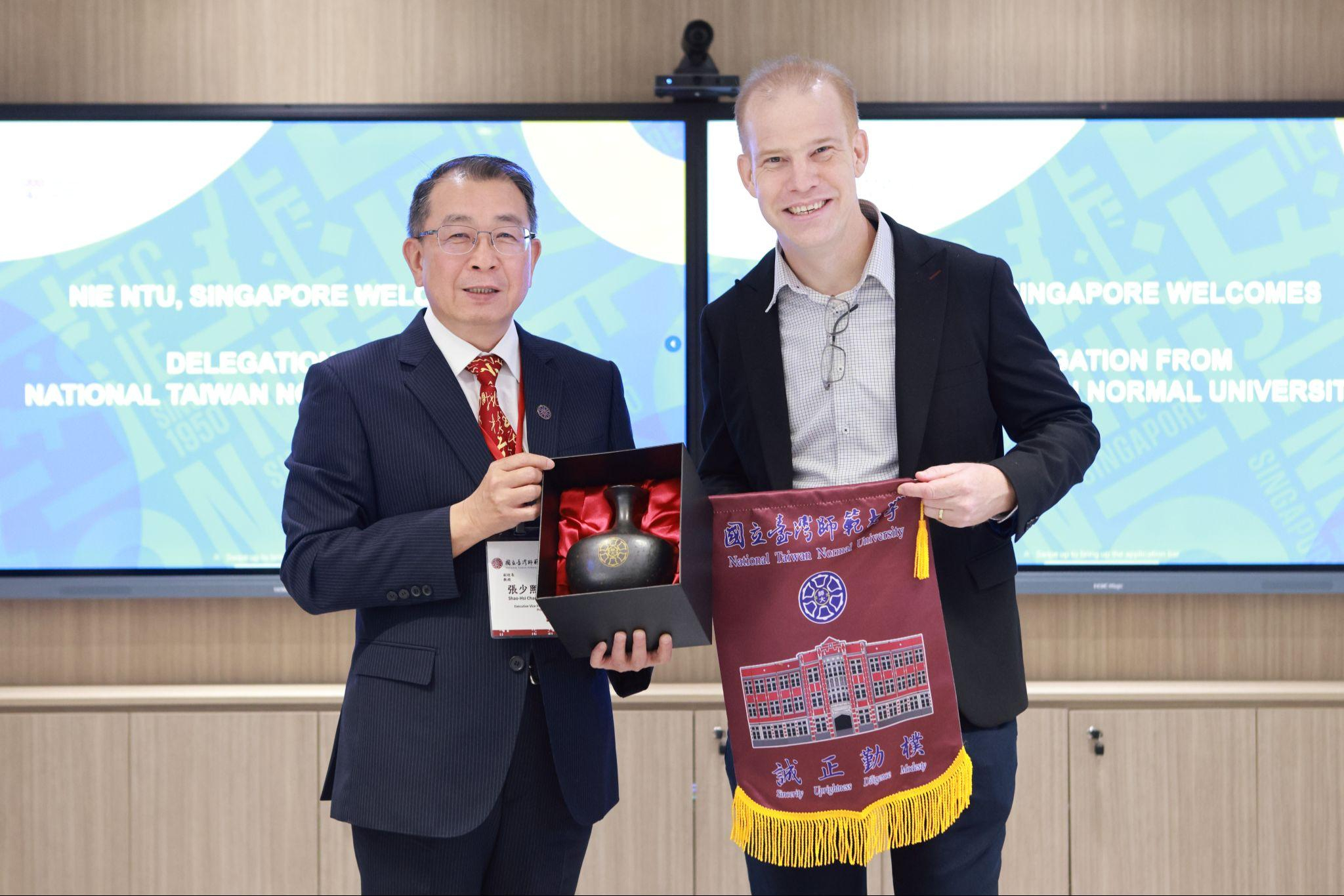
NTNU presents a gift to NIE representative Kristopher O’Brien.
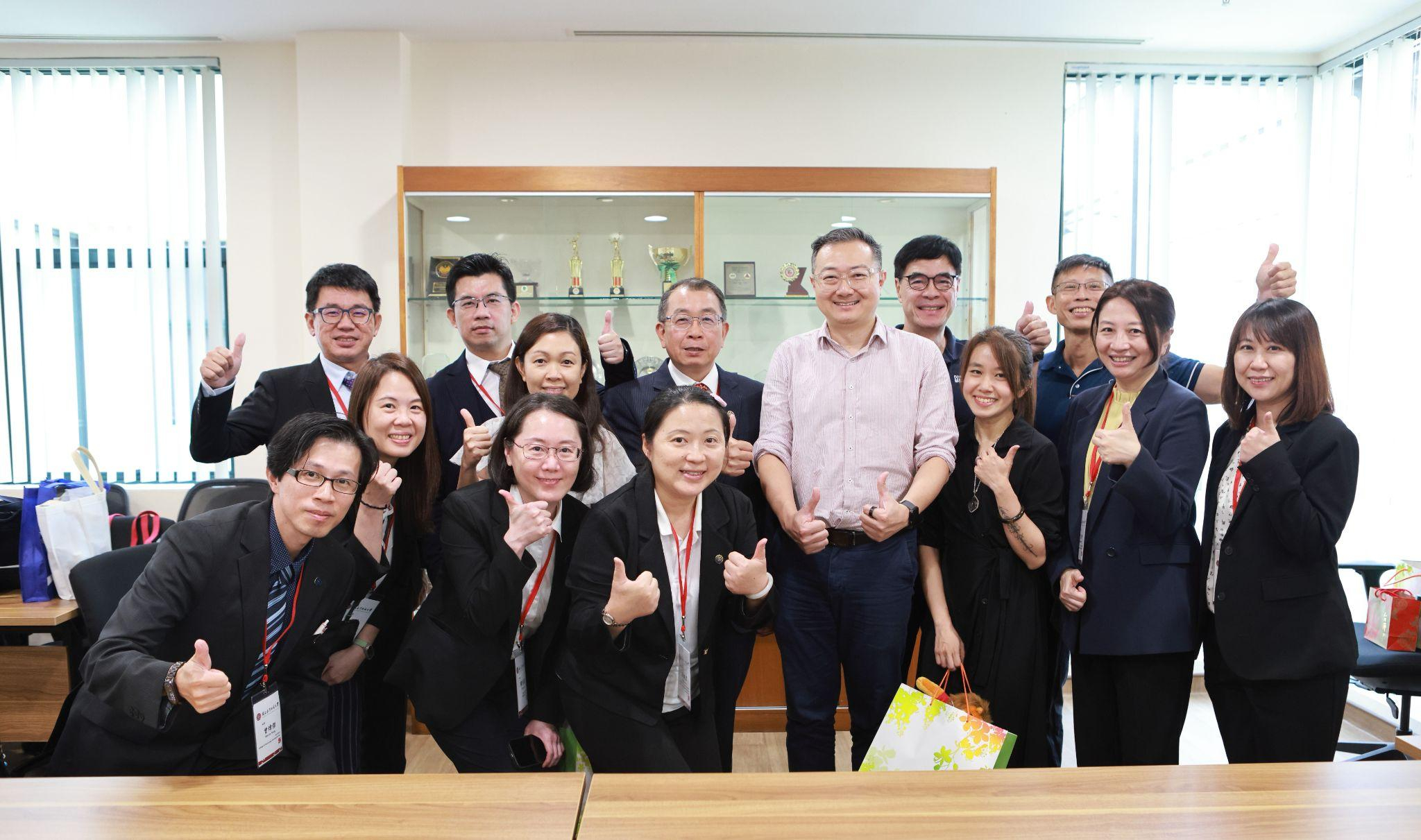
NTNU delegation with NIE faculty and alumni, including Moh Lee Fair, Adrian Kee Ying Hwa, Zason Chian Lit Khoon, Koh Koon Teck, and Ng Mei Xin.
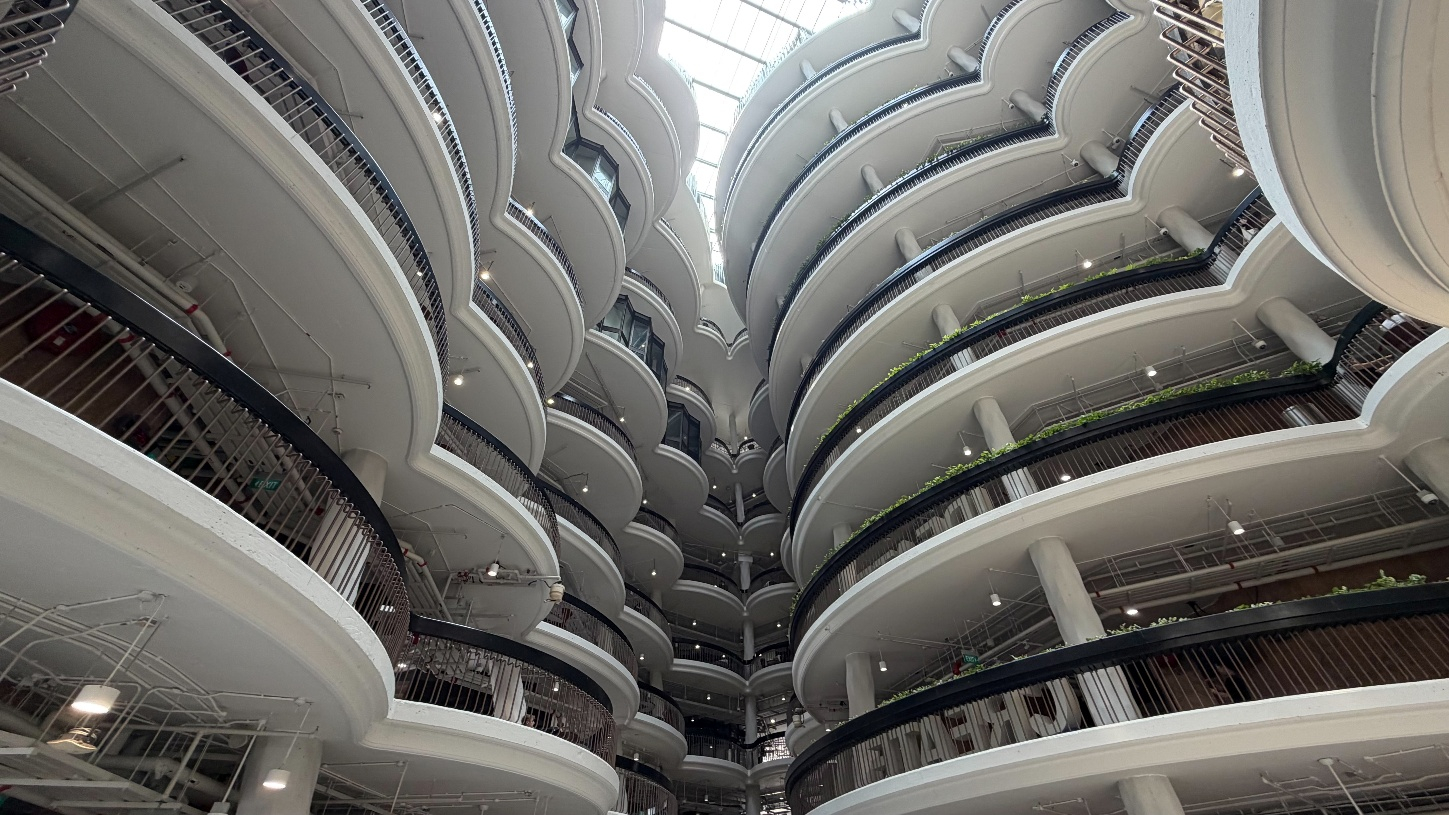
The Hive (UOB Innovation Hub) at NTU encourages interaction and collaborative learning.
People-Centered AI Transformation
At NIE, Chief Learning & Innovations Officer Associate Professor Chua Bee Leng welcomed the NTNU delegation to a sharing session of rich authentic examples by representatives from divisions such as teaching innovation, digital solutions, and facilities management. NIE emphasized a “pedagogy first, technology second” approach: technology should support educational needs rather than become an end in itself. Its AI Workspace brings multiple generative AI models into a managed environment with access controls. Specialized AI assistants support tasks such as policy inquiries and course planning, while AI analysis of classroom interactions helps teachers reflect on their teaching. NIE also stressed training and ethical judgment to ensure that AI supports, rather than replaces, educators. Its approach highlighted the importance of giving faculty and staff both practical tools and clear expectations for responsible use. Rather than treating every AI application as a separate experiment, the institute is working toward coordinated support for teaching and administrative tasks.
At NUS, Chief People and Culture Officer and Vice President Agnes Tan introduced the university’s “X + AI” approach. Staff members are encouraged to combine their own professional knowledge with AI, carefully check AI-generated content, and follow clear rules on data access and tool use. NUS offers internal tools, including AI Know, alongside structured training. More than 5,000 employees have completed the mandatory basic training on data science, and approximately 6,400 have received AI-related training. Advanced courses, professional qualifications, and practical projects help employees apply data and AI skills in their work. Staff who complete higher-level data analytics training may earn qualifications such as Associate Data Scientist, along with additional allowances, and are expected to contribute to departmental projects. The training model offers NTNU a useful reference for developing different learning pathways for staff with different professional development inclinations and responsibilities.

NTNU delegation meets representatives of NUS.
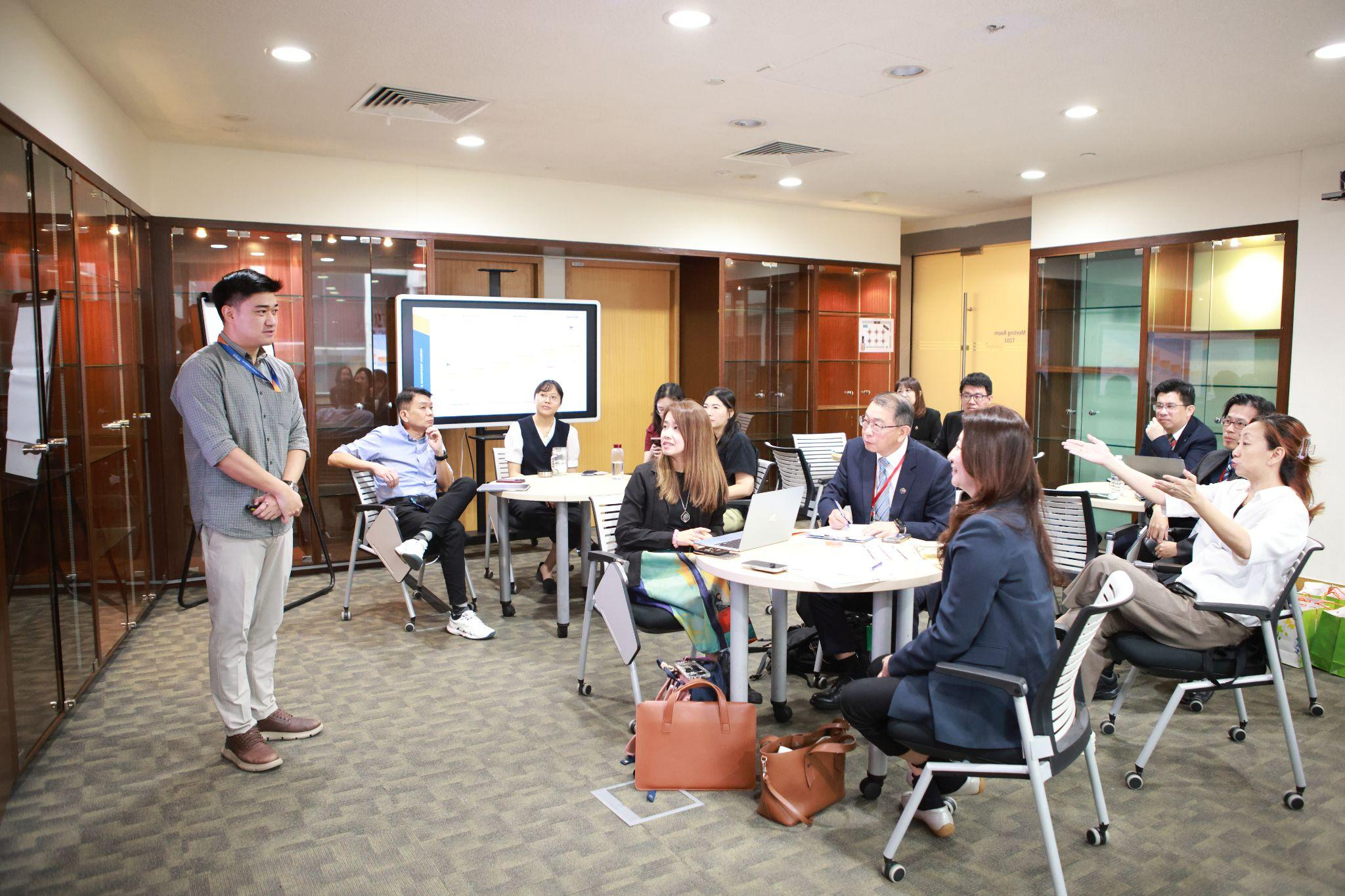
NTNU and NUS representatives exchange views.

NTNU exchanges gifts with NUS Chief People and Culture Officer Agnes Tan (center) and colleagues.
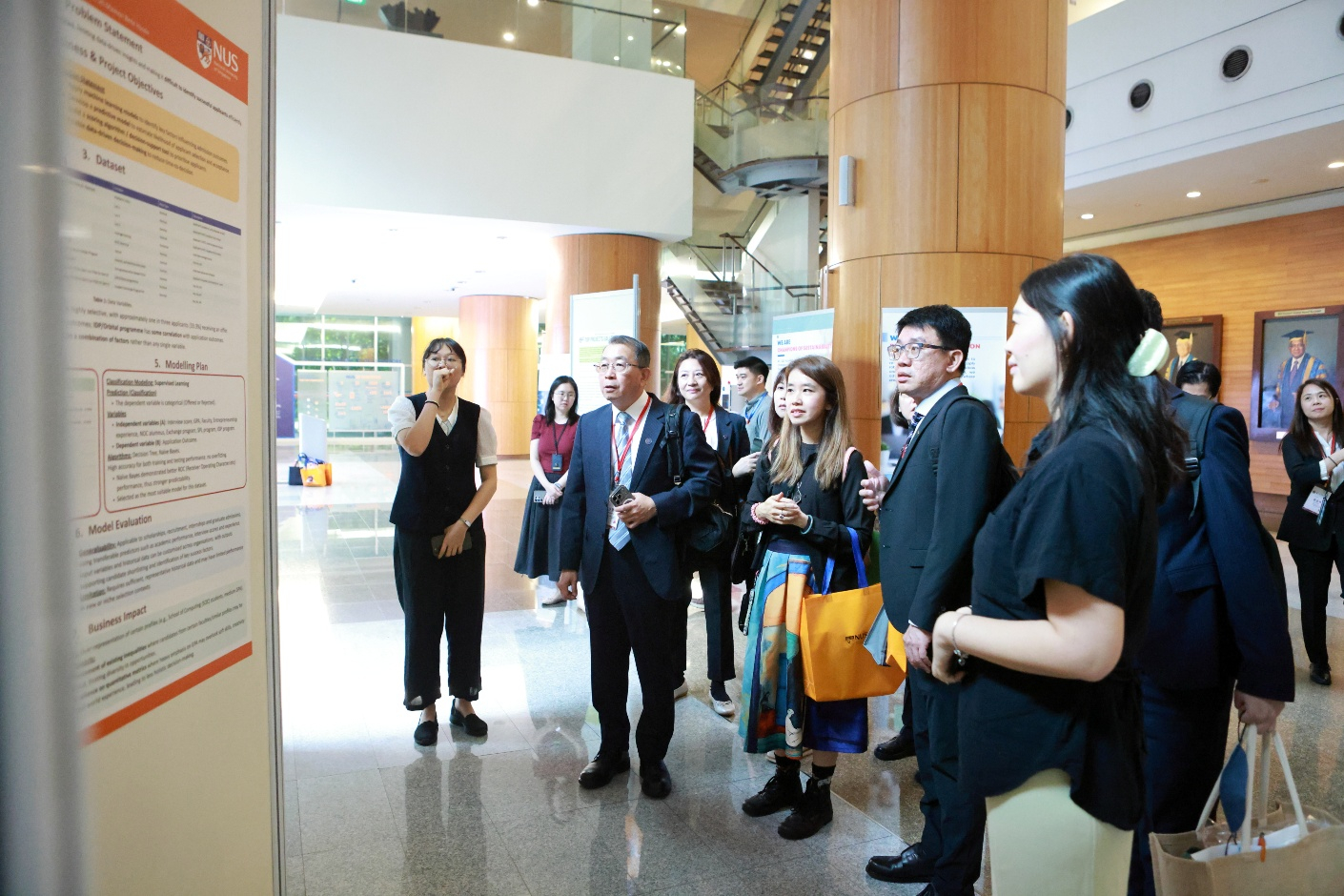
The delegation views an exhibition of NUS staff AI applications.
Executive Vice President Chang shared NTNU’s guiding principle: “Brain first, AI second, Human always.” He noted that AI can reduce repetitive tasks, but professional judgment and personal care remain central to serving students and faculty. He emphasized that a secure and trusted environment helps employees use AI with confidence and devote more time to meaningful interaction with the university community.
At SMU, Dr Lian Hui, Associate Director of the International Office, joined representatives of Integrated Information Technology Services and the Office of Campus Infrastructure and Services in meeting with the NTNU delegation. SMU described a “citizen developer” model that allows administrative staff, with IT guidance, to build tools for everyday problems. As a case in point, an automated postgraduate onboarding process reduced manual processing time by about 81%. These examples showed how process redesign and well-supported digital tools can deliver measurable improvements. SMU also described AI governance across education, research, and university administration.
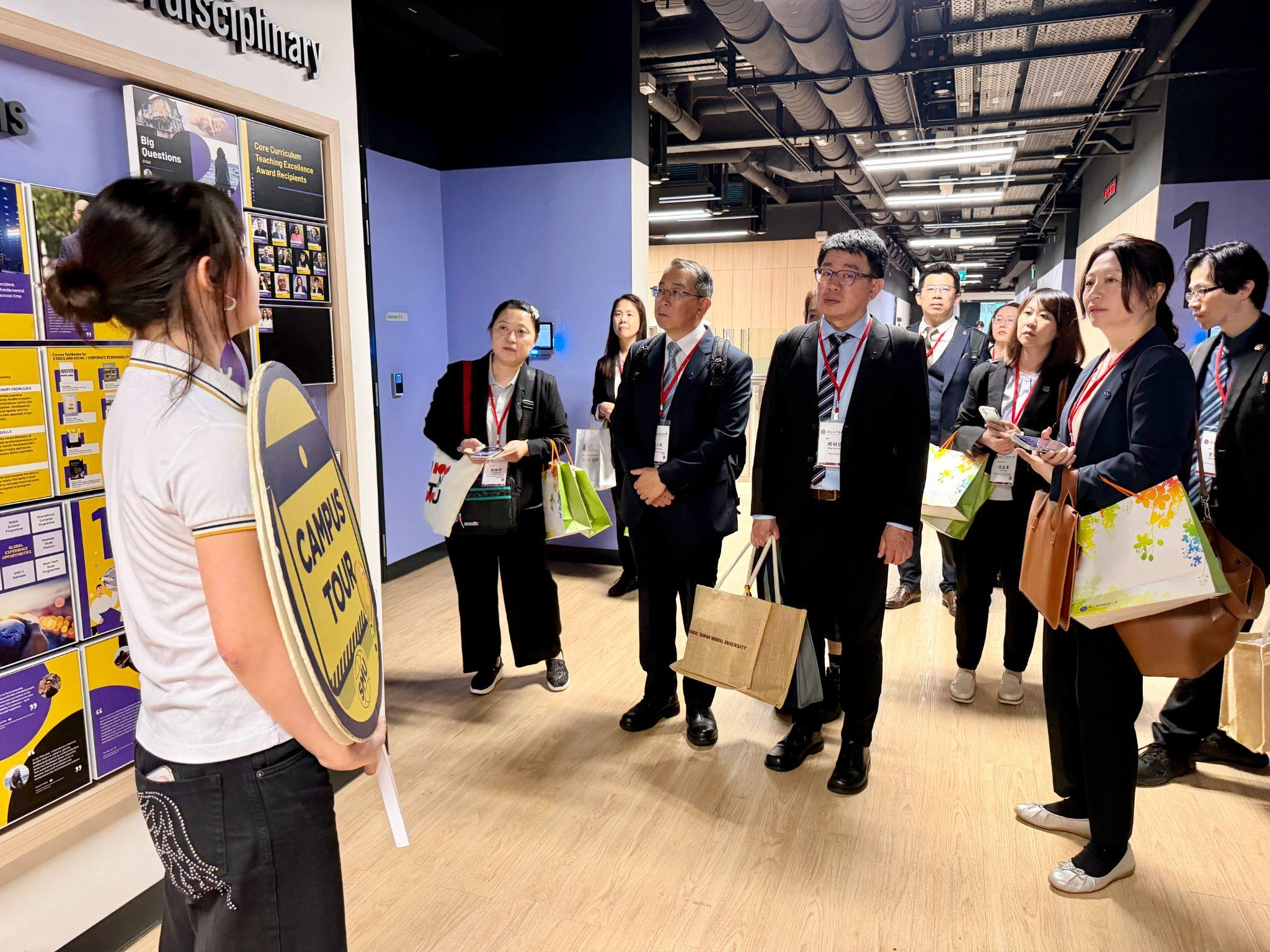
SMU student ambassador leads a campus tour.
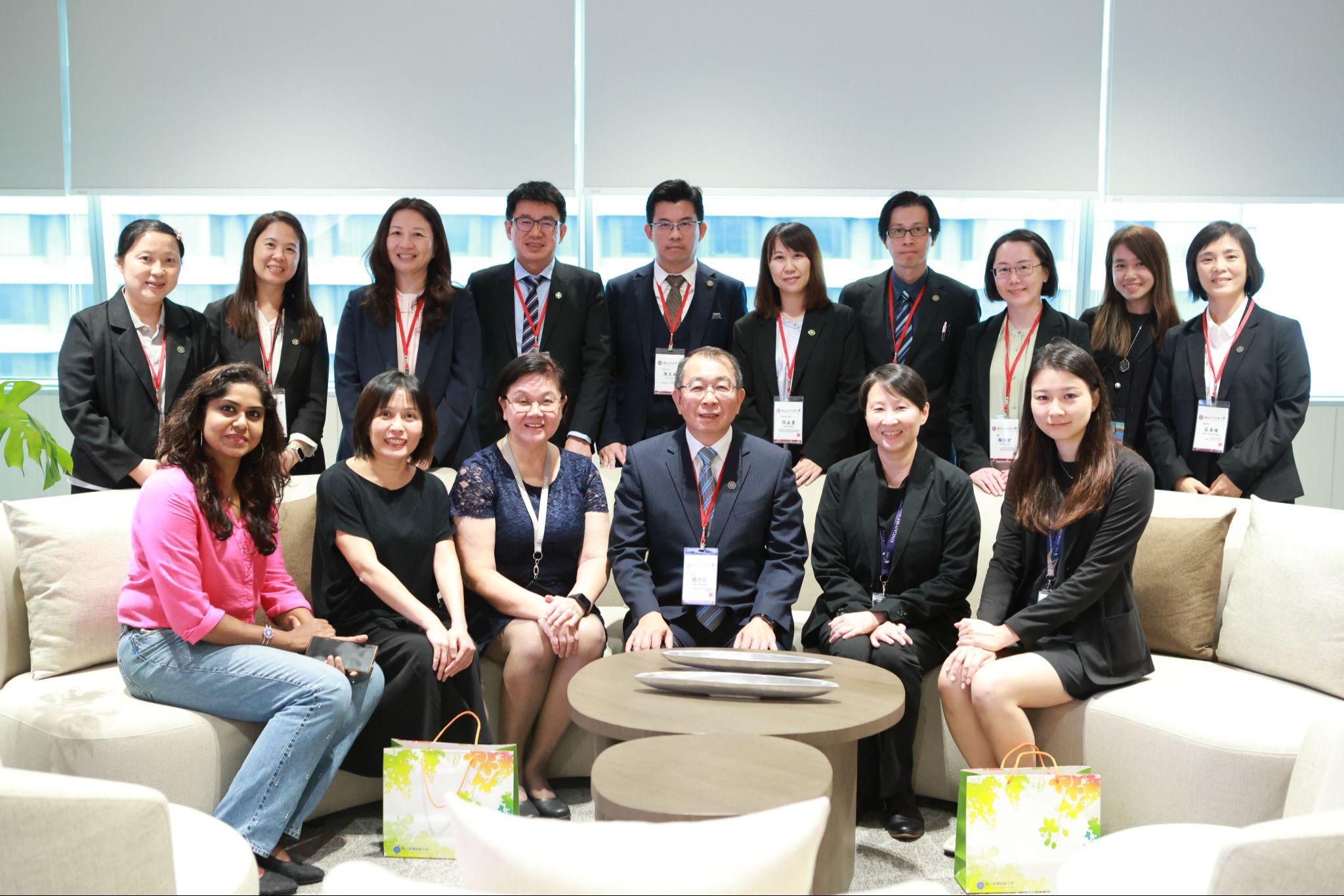
NTNU delegation with SMU representatives.
Sustainable and Flexible Campus Spaces
Campus development was another focus of the visit. At NTU, Chief Development & Facilities Management Officer Simon Xie and Principal Architect Tan Swee Yong explained how NTU’s teaching areas are planned in accordance with student and staff numbers, while research space reflects funding and actual needs. NTU uses phased renovation and flexible space arrangements to maintain campus operations, with structural safety taking priority. NTU is also developing a campus master plan that considers walkability, public areas, and future transport connections. The university is gradually exploring ways to put a number on the cost of space so that departments have stronger incentives to use their facilities efficiently. The delegation also observed The Hive (UOB Innovation Hub), whose distinctive design encourages interaction and collaborative learning.
At SMU, Bharathy G Shanmugam, Head of Campus Development, shared how SMU’s renovation of its main administrative building was carried out after consulting with users. The building renewal saw the construction of collaborative work areas and green building features which achieved energy savings as high as 60%. Renovation was carried out floor by floor, with high-noise work scheduled outside regular hours when possible, while temporary offices, phased construction, and advance communication helped reduce disruption to staff. During a student-led campus tour, the delegation visited the Kwa Geok Choo Law Library, during which EVP Chang noted its glass-partitioned study rooms and suggested that partially frosted glass could help balance openness and privacy in future NTNU learning spaces. The tour also showed how staircases, seating and shared areas can become inviting places for conversation, rest, and informal learning without requiring entirely new buildings.

Flexible, open work and learning spaces at SMU.
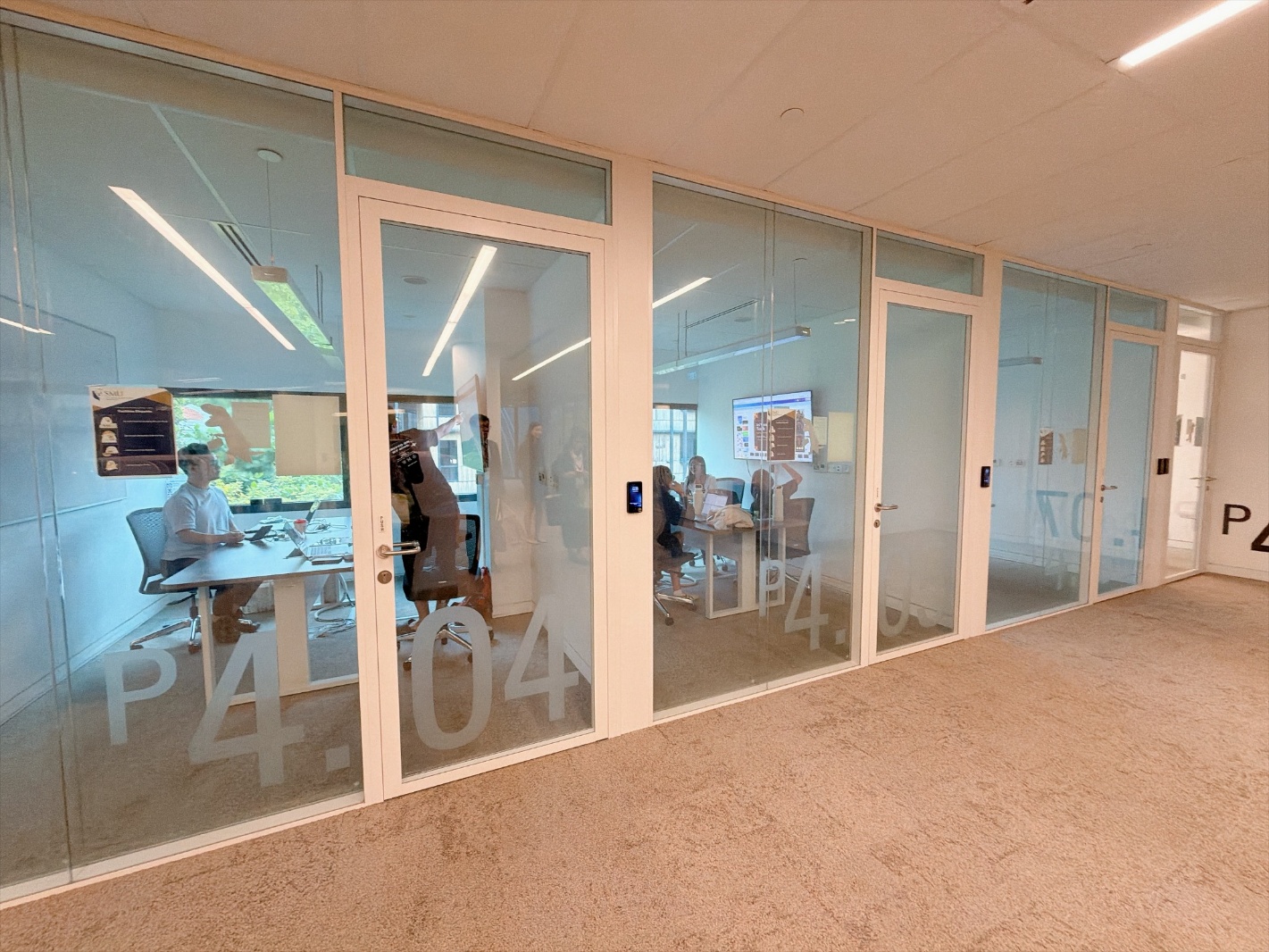
Semi-transparent study rooms at the Kwa Geok Choo Law Library.
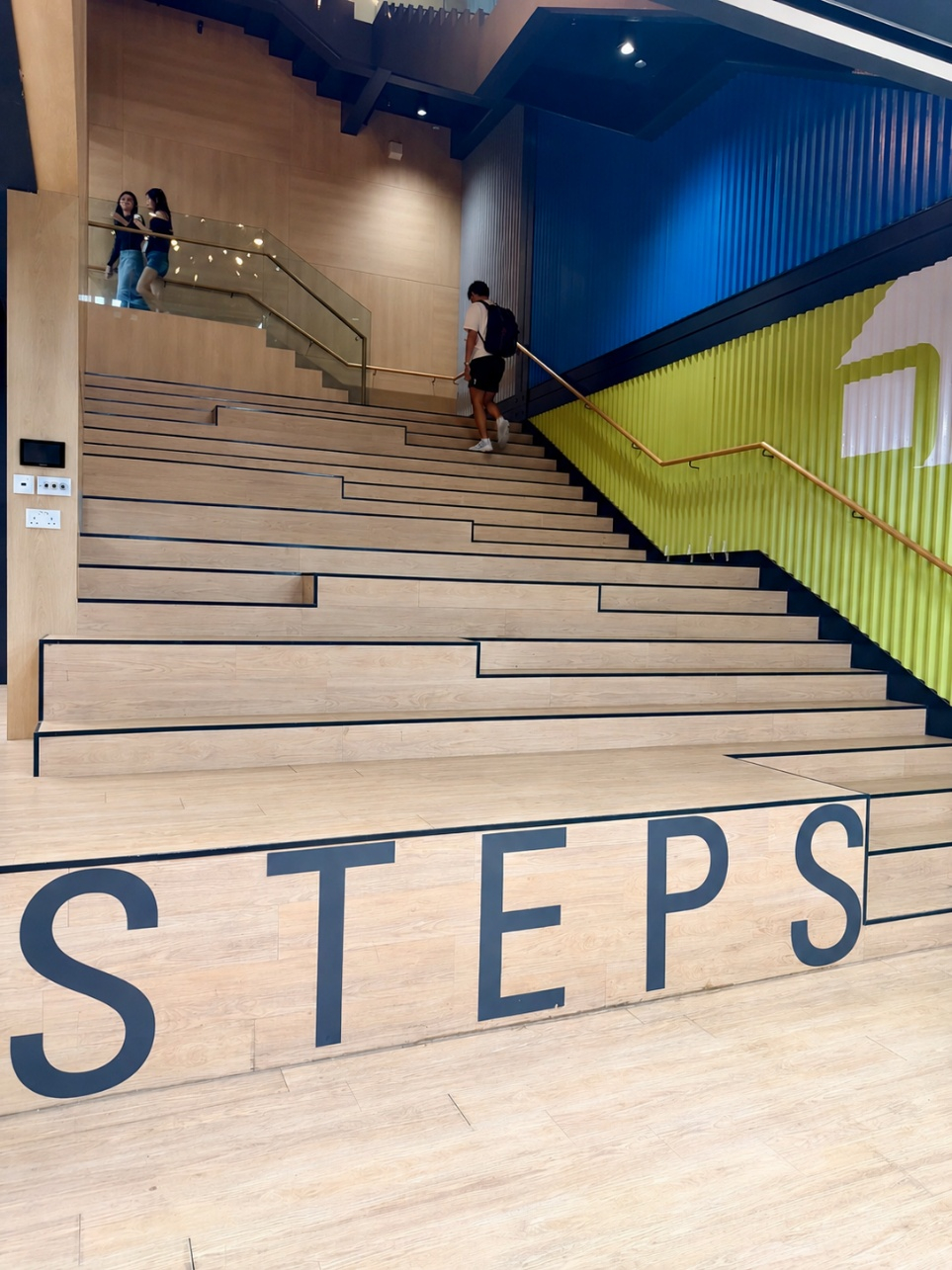
SMU stairways also serve as informal spaces for rest and exchange.
Lessons for NTNU’s Next Steps
The delegation also met NTNU alumni working in Singapore and exchanged views with Ambassador Chen-Yuan Tung at the Taipei Representative Office in the Republic of Singapore. Discussions covered talent policy, higher education internationalization, and university–industry cooperation. Ambassador Tung emphasized that attracting international students should be linked to language support, career opportunities, and industry needs to encourage graduates to remain in Taiwan. The alumni gathering offered another opportunity to maintain NTNU’s connections with graduates overseas.
EVP Chang concluded that meaningful administrative transformation requires more than new tools: policies, people, and institutional culture must grow in tandem. NTNU will draw on these three universities’ experience to strengthen responsible AI use, staff capabilities and campus spaces while remaining human-centric.

Executive Vice President Shao-Hsi Chang with Ambassador Chen-Yuan Tung.
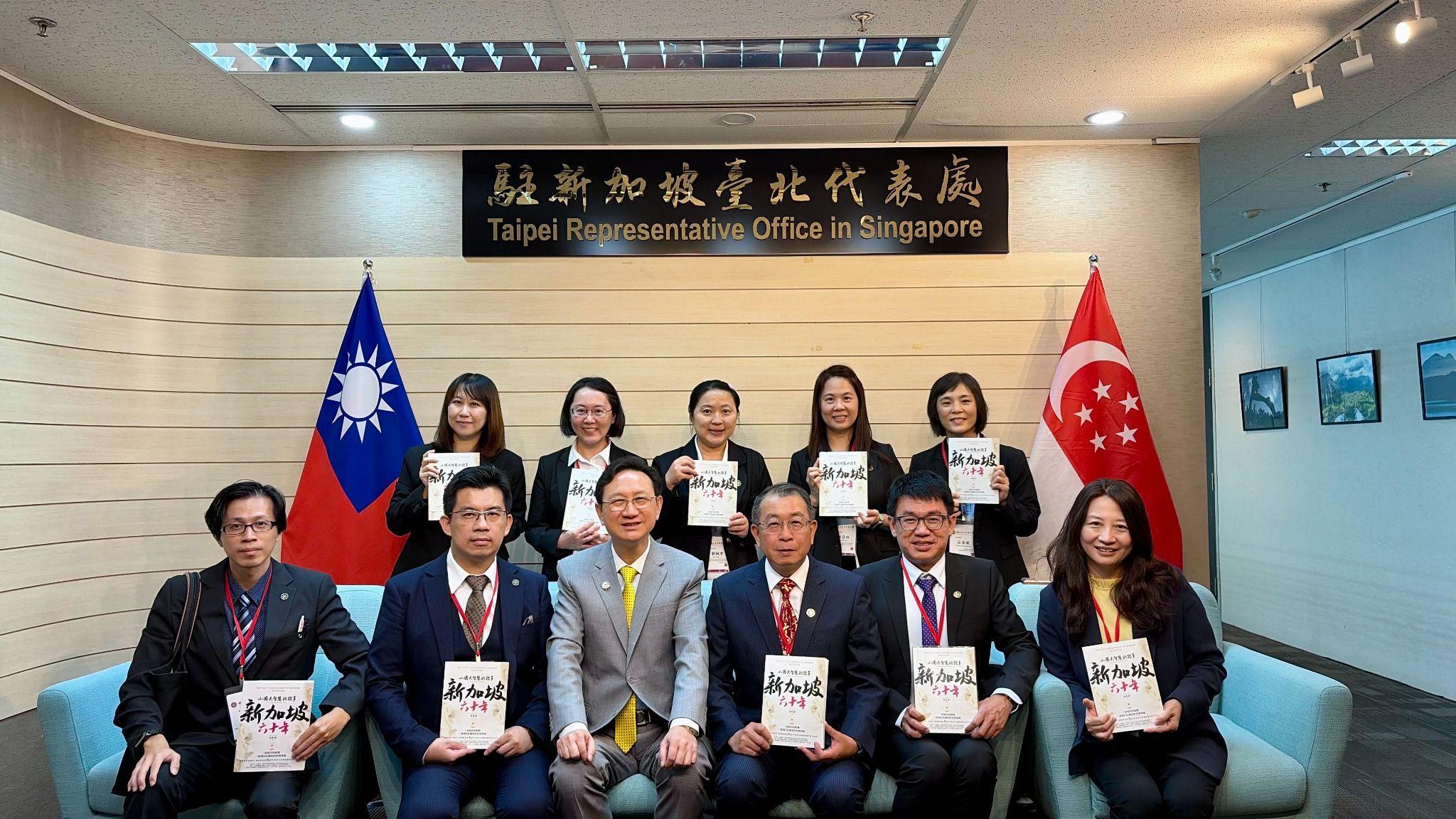
NTNU delegation with Ambassador Chen-Yuan Tung in Singapore.