

From Global Academia to International Scientific Dialogue: An Interview with Prof. Andreas Güntner, General Chair of Eurosensors 2026
Exploring the Future of Smart Sensing, Wearable Biomedical Technologies, Artificial Intelligence, and Quantum Technologies, with Insights into Taiwan’s Technological Strengths and Opportunities for International Collaboration
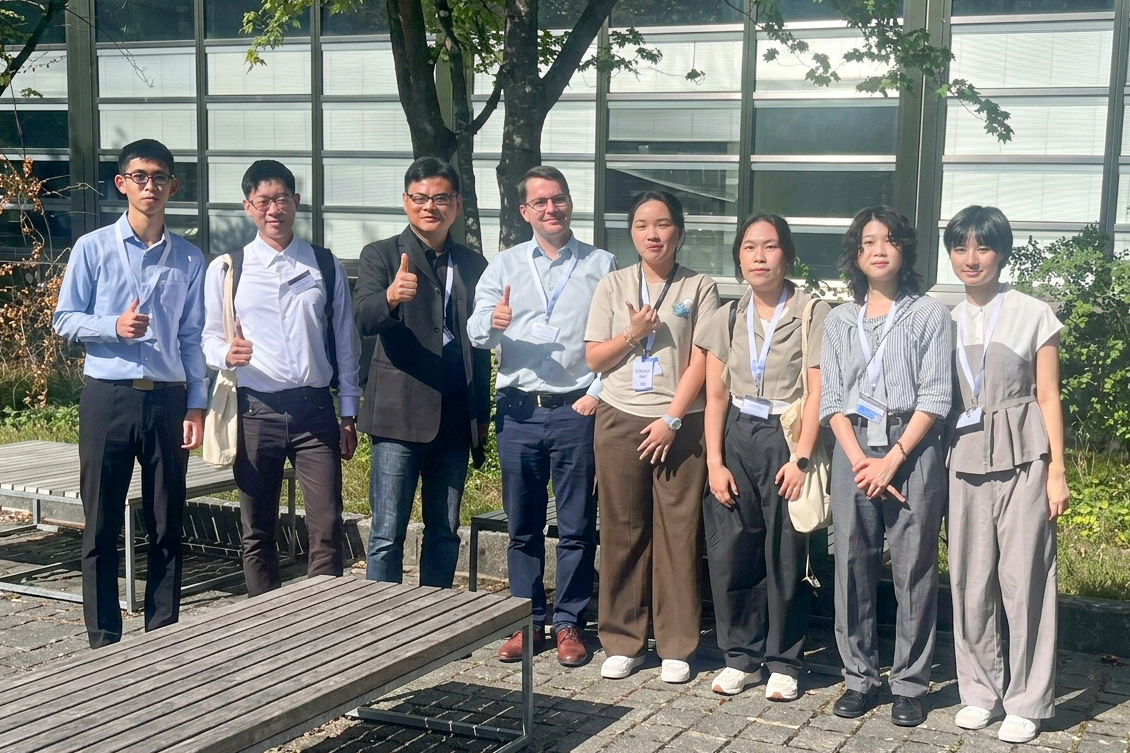
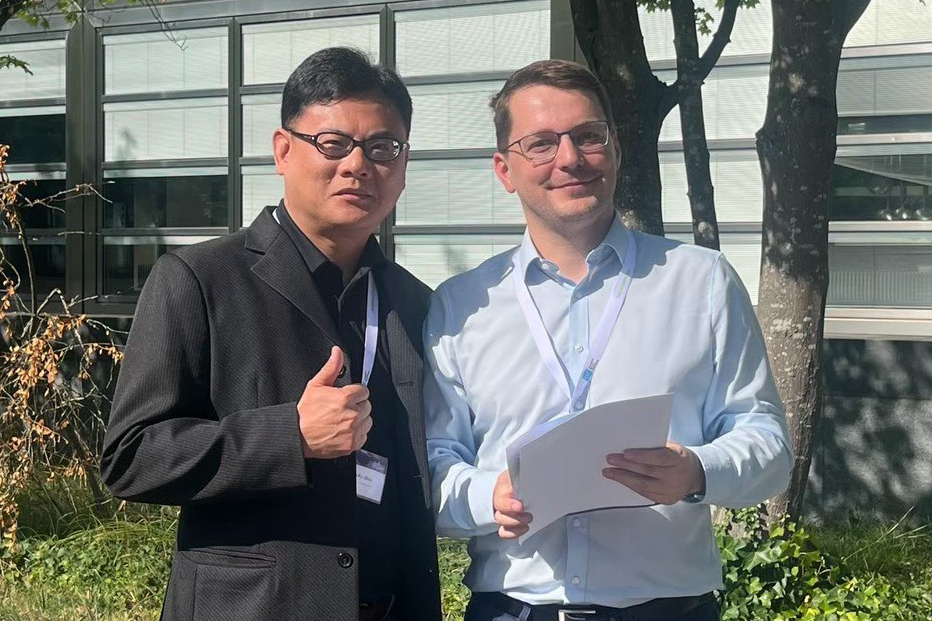
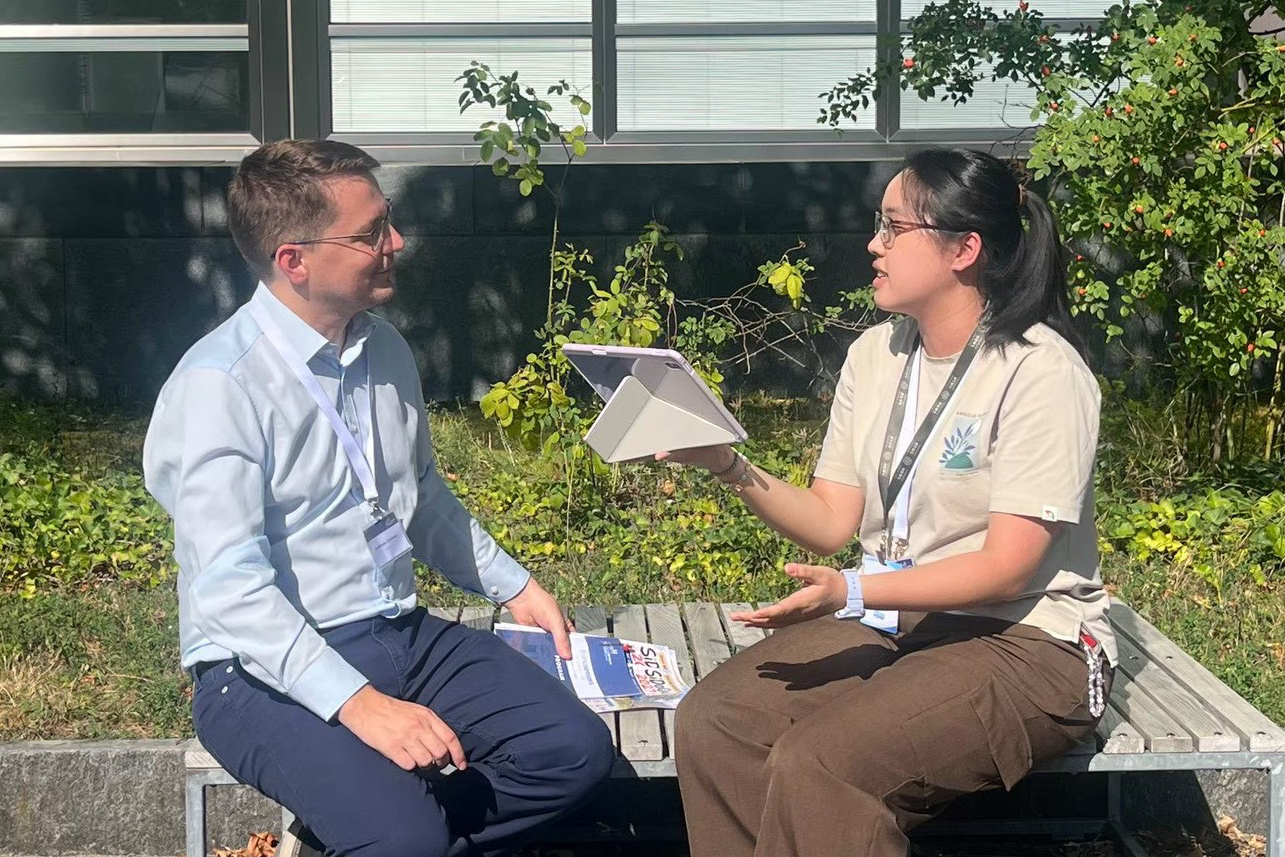
Sensing technology is a cornerstone of modern information technology, underpinning applications ranging from smartphones and autonomous vehicles to precision medicine, artificial intelligence, and wearable devices. A research team led by Prof. Nan-Fu Chiu at Institute and Undergraduate Program of Electro-Optical Engineering, National Taiwan Normal University (NTNU), traveled to Europe to participate in Eurosensors 2026, an international conference on sensor technology. In addition to presenting research and exchanging academic insights, the team interviewed the conference general chair, Prof. Andreas Güntner of the Department of Mechanical and Process Engineering at ETH Zürich, to explore emerging sensing technologies and opportunities for research collaboration between Taiwan and Europe.
Organized by Prof. Chiu’s research team, the interview covered global developments in sensing technology, emerging directions in next-generation sensors, and technological advances driven by artificial intelligence (AI) and quantum technologies. The discussion also examined how Taiwan can build on its existing technological strengths to expand interdisciplinary applications and international research partnerships, while offering insights for young researchers pursuing scientific innovation.
Biomedical Sensing and Student Innovation: Expanding the Applications of Sensor Technology
Discussing the distinctive features of Eurosensors 2026, Prof. Güntner highlighted the conference’s strong emphasis on biomedical sensing. This focus was evident in the keywords of submitted abstracts, invited speakers, and technical sessions. Topics such as biomedical optical sensing, microfluidic chips, home healthcare monitoring, and wearable physiological measurement systems featured prominently, reflecting growing efforts in Europe to apply sensing technologies to preventive medicine and personalized healthcare.
Another highlight was the introduction of Hackathon at Eurosensors, an international student sensing competition that encourages teams to develop innovative sensing technologies and compete for awards. Prof. Güntner praised the technical integration skills and creativity demonstrated by participating students, emphasizing that young researchers are already capable of developing outstanding solutions. The competition also provided a platform for interdisciplinary exchange and helped cultivate the next generation of sensing technology innovators.
The conference attracted strong participation and covered a broad range of topics, from fundamental materials science to signal processing. According to Prof. Güntner, this breadth reflects the interconnected nature of the sensing technology ecosystem, spanning both foundational research and practical applications. Such interdisciplinary exchange enables researchers to share findings, explore emerging opportunities, and establish collaborations that can accelerate technological innovation.
Wearable Health Monitoring and Chemical Sensing in Robotics: Emerging Trends for the Next Five to Ten Years
Looking ahead to the next five to ten years, Prof. Güntner identified wearable health monitoring as a field with significant potential. Wearable systems can extend healthcare beyond hospitals and doctors’ offices by continuously collecting health data in everyday settings. The key, he explained, is not simply to make smartwatches and fitness trackers more sophisticated, but to ensure that the data they generate are reliable and accurate enough to support clinical decision-making.
Unlike conventional healthcare, which often relies on measurements taken during individual visits to medical facilities, wearable sensing technologies can monitor physiological changes continuously at home, at work, and throughout daily life. Once their sensitivity, specificity, and reliability meet clinical standards, these long-term data could provide valuable information for early disease screening and diagnosis, helping bring healthcare closer to patients and supporting more personalized approaches to prevention and treatment.
Prof. Güntner also identified chemical sensing in robotics as a promising frontier. While robots have become increasingly capable in mechanical control and visual perception, their ability to detect chemical substances through smell- and taste-like sensing remains underdeveloped. Integrating chemical sensors into robotic systems could expand their ability to recognize environmental conditions and respond to situations that conventional visual sensors cannot adequately address.
Potential applications include real-time environmental pollution monitoring, industrial hazard detection, flammable gas warnings, and non-invasive disease screening through human breath analysis. Prof. Güntner noted that advances in materials science and sensor design will be essential to developing these technologies further, creating new opportunities in environmental monitoring, safety, and medical diagnostics.
AI for Complex Sensor Data Interpretation and Quantum Technologies for Advanced Measurement
Prof. Güntner sees AI as a key technology for extracting meaningful information from complex sensor signals, particularly in long-term medical monitoring and robotics. Sensors already generate substantial amounts of data; the next challenge is to interpret these signals and transform them into actionable insights. By analyzing large, complex, and continuously collected datasets, AI can help identify patterns and produce information relevant to clinical assessment, environmental analysis, and decision-making.
Quantum technologies, meanwhile, may expand the physical limits of measurement. Prof. Güntner noted that they could enable researchers to measure physical quantities that current technologies cannot readily access or achieve unprecedented levels of sensitivity. By exploiting the sensitivity of quantum systems to external changes, quantum sensing may improve the detection of extremely weak signals and open new research possibilities in fundamental physics and biomedical measurement.
Together, wearable sensing, robotic chemical detection, AI, and quantum technologies illustrate how next-generation sensing is moving beyond data collection toward intelligent interpretation and interdisciplinary integration. Combining these capabilities will be crucial to translating complex signals into useful information and developing sensing systems that address real-world challenges.
Taiwan’s Strengths in Semiconductors and Microfabrication: New Opportunities for International Collaboration
Prof. Güntner expressed strong recognition of Taiwan’s technological capabilities, particularly in microfabrication, microelectromechanical systems (MEMS), and chip manufacturing. He also suggested that Taiwan could build on these strengths by diversifying into a wider range of sensing applications and interdisciplinary fields, thereby reducing the risks associated with relying too heavily on a single technology or sector.
He noted that Taiwan has an opportunity to connect its established strengths in semiconductors, microfabrication, and MEMS with AI, biomedical optics, wearable devices, robotics, chemical sensing, and quantum technologies. Major innovations often emerge at the intersection of different disciplines. By extending its manufacturing expertise into these areas, Taiwan could develop new applications while building a more resilient and forward-looking technology ecosystem.
When asked how young Taiwanese researchers could engage with the international scientific community, Prof. Güntner encouraged them to identify a significant challenge they genuinely want to solve, rather than focusing solely on short-term student projects. Important scientific questions often require sustained effort, he explained, and curiosity and long-term motivation are essential for meaningful progress. He also urged students attending international conferences to actively approach other researchers and initiate conversations rather than simply listening to presentations.
“As I mentioned in my opening lecture: meet someone new, learn something new, and ideally start something that can develop into a collaboration that goes beyond,” he said. For Prof. Güntner, international conferences are not merely opportunities to acquire knowledge; they can also serve as starting points for lasting research partnerships.
The NTNU team also explored the possibility of future academic and student exchanges between ETH Zürich, NTNU, and other Taiwanese universities. Prof. Güntner responded positively, noting that he already maintains scientific connections with researchers in Taiwan. Although formal student exchange programs may not currently be in place, he considers exploring collaboration and exchange opportunities at the master’s and doctoral levels a promising direction. His response opened the door to moving beyond conference-based encounters toward substantive international research cooperation.
Encouraging Young Researchers to Stay Curious and Pursue Unresolved Real-World Problems
At the end of the interview, the team asked Prof. Güntner what advice he would offer young Taiwanese students interested in sensors, engineering, and scientific exploration. Rather than recommending a particular programming language or encouraging students to follow the latest technological trends, he urged them to identify major scientific challenges that genuinely motivate them over the long term. Research, he emphasized, should be driven by a desire to solve meaningful problems, not merely by the need to complete an academic assignment.
Using gas sensors as an example, Prof. Güntner pointed out that researchers and companies have invested considerable effort in applications such as disease diagnosis through human breath and environmental pollution monitoring. Yet these technologies have not necessarily become widespread in everyday life. The gap between a successful laboratory prototype and a solution that is widely adopted remains a significant challenge—and an opportunity for future researchers to make a meaningful contribution.
He encouraged students to remain curious, observe the world around them, and question whether existing technologies truly solve the problems they were designed to address. Research progress should not be measured solely by the number of studies published or the sophistication of a technology, but also by its ability to meet real-world needs. International exchanges can further broaden perspectives, introduce new ideas, and create connections that may develop into long-term collaborations.
Reflecting on the interview, the NTNU team gained not only a deeper understanding of emerging sensing technologies but also a broader perspective on interdisciplinary research and international cooperation. Taiwan’s strengths in semiconductors and microfabrication provide a strong foundation for future innovation, while connections with AI, biomedical technologies, robotics, and quantum sensing may open up new possibilities. International conferences can play an important role in this process, especially when participants take the initiative to ask questions, build relationships, and turn brief encounters into lasting partnerships.
From attending an international conference to interviewing its general chair, the team’s experience at Eurosensors 2026 demonstrated that valuable learning opportunities often extend beyond a planned itinerary. They emerge when researchers remain curious, ask questions with confidence, and take the initiative to act. For young researchers in Taiwan, this is an important reminder that meaningful scientific breakthroughs often begin with a real-world question, a willingness to explore, and the courage to take the first step.
For more information, please visit: https://www.eurosensors2026.ch/
Written by: Hsiao-Yu Ko, Campus Reporter, Institute and Undergraduate Program of Electro-Optical Engineering (Class of 2027)
Reviewed by: Prof. Nan-Fu Chiu, Institute and Undergraduate Program of Electro-Optical Engineering