

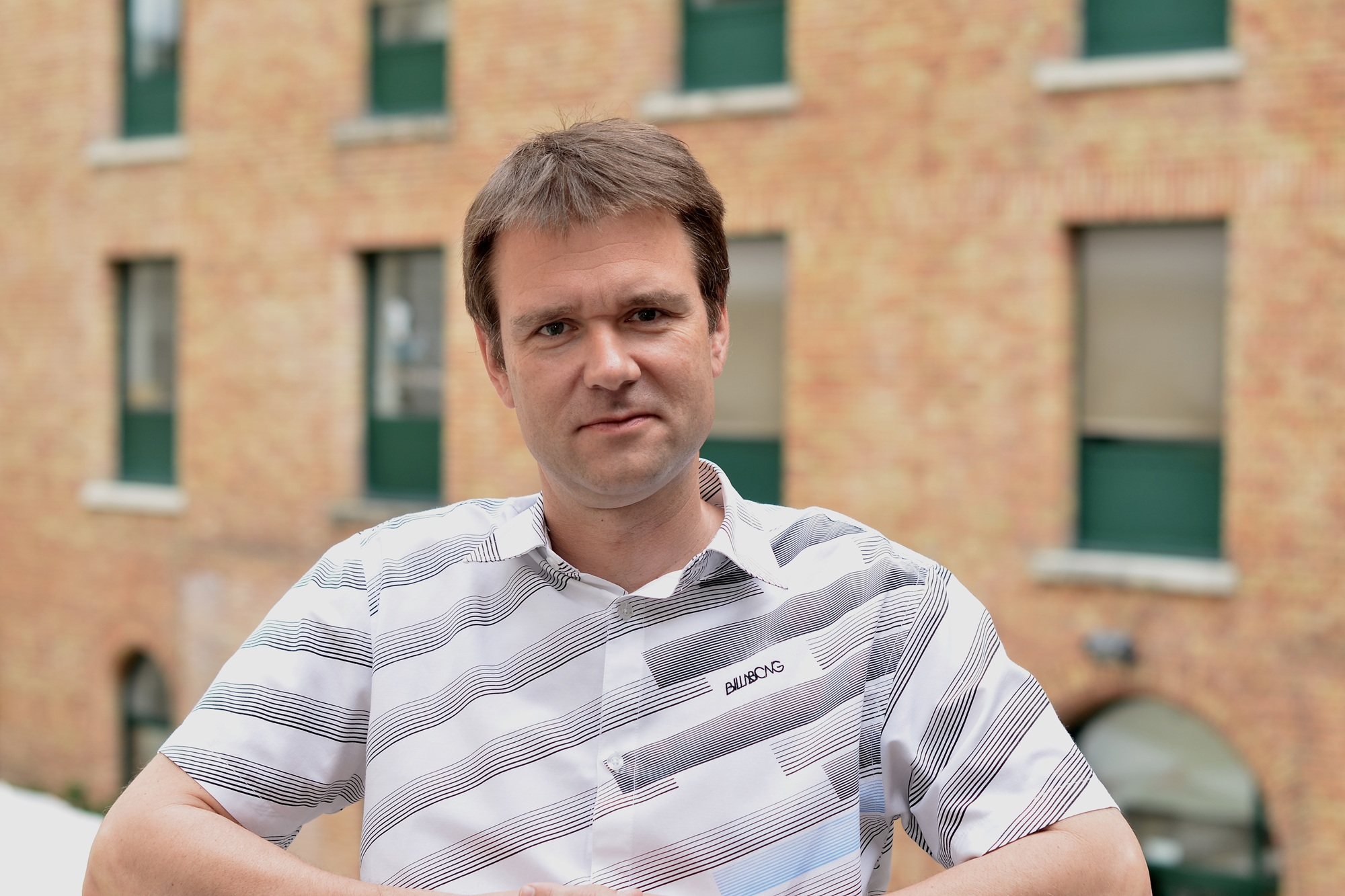
Ludger Johannes of Institut Curie visits NTNU to deliver a keynote lecture on how sugars control what enters a cell
The Department of Chemistry at National Taiwan Normal University hosts the International Symposium on Frontiers of Chemical Biology and Molecular Sciences on 23 November 2026, with Ludger Johannes of Institut Curie in Paris as keynote speaker. His visit is supported by the National Science and Technology Council under its programme for short-term visits by international scholars. Professor Johannes arrives in Taipei on 21 November and stays until 26 November, and in addition to the NTNU keynote he gives a seminar at the Genomics Research Center of Academia Sinica on 24 November.
Ludger Johannes is Research Director at INSERM and between 2014 and 2024 founding director of the chemical biology department at Institut Curie. He was elected a member of EMBO and of the Leopoldina, and was selected as an ERC Advanced Grant holder. He pioneered two concepts in cell biology, the retrograde route from endosomes to the Golgi apparatus and GlycoLipid-Lectin driven endocytosis, with findings published in Cell, Nature and Nature Cell Biology. His team also turned that fundamental work into therapy, establishing the Shiga toxin B-subunit as a delivery vector for cancer immunotherapy and targeted treatment, generating twelve patent families and contributing to the founding of biotechnology companies.
The surface of every animal cell is covered in glycans, chains of sugar units long regarded as a fairly static layer. Professor Johannes has shown that lectins outside the cell can bind and cluster particular sugar-bearing lipids, bending the membrane inward into tubular pits that carry material into the cell. His group recently found that cells can switch this process on and off by reversibly removing sialic acid from cargo proteins, changing their sugar makeup on the spot. They call this the GlycoSwitch, and it shows that the sugar makeup of a cell surface is dynamically regulated by growth factor signalling, with consequences for how tumour cells change state and spread.
Yane-Shih Wang of NTNU Chemistry, who hosts the visit, says the two groups will also use the week to plan joint work, building site-specific glycosylation tools by genetic code expansion in order to study how lectins oligomerise, and preparing a bilateral Taiwan and France research proposal.
The symposium also features invited speakers from Osaka Metropolitan University, Shizuoka University and Suranaree University of Technology, together with student flash talks and a poster session. Staff and students from all institutions are welcome.