


2026.1108
NTNU Highlights Taiwan–Japan Research Collaboration at 2026 UAAT and KOOU Student Symposium
National Taiwan Normal University (NTNU) hosted the 2026 UAAT and KOOU Student Research Symposium in Social Sciences and Humanities on November 8 at Education Building. The event brought together approximately 60 faculty members and students from seven universities in Taiwan and Japan to share research findings and explore interdisciplinary collaboration in sustainability, humanities, social sciences, and technology. As the coordinating university for the Social Sciences and Humanities integrated project under the University Academic Alliance in Taiwan (UAAT), NTNU continues to promote international research collaboration and talent development.
The symposium opened with remarks by Professor Wen-Chin Lin, Associate Vice President for Research and Development at NTNU. Lin recognized the dedication of the participating research teams, noting that despite administrative adjustments and funding constraints, they had continued to advance Taiwan–Japan academic exchanges and student development. Their achievements will also be presented at an alliance-wide symposium to universities and the Ministry of Education.
Interdisciplinary Research Connects Sustainability, Design, and Technology
The symposium highlighted the achievements of four subprojects covering cross-cultural learning, legal studies, environmental sustainability, and technological applications.
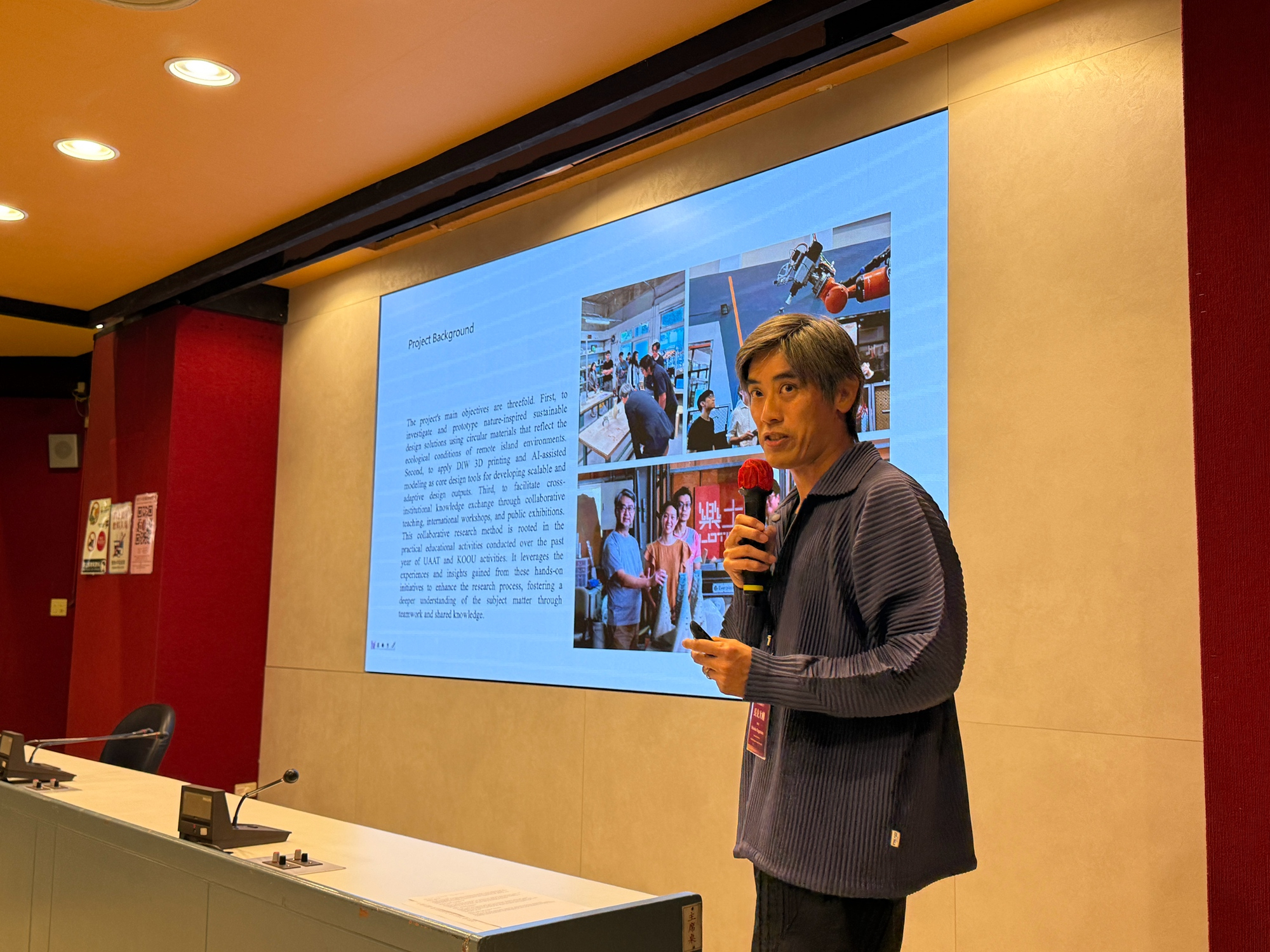
Daisuke Nagatomo's research team presented a Taiwan–Japan collaborative project on coral reef restoration. By integrating artificial intelligence and recycled materials, the team developed artificial reef structures designed to support coral conservation. A 3D model of the artificial reef was displayed at the symposium, allowing participants to explore the project's design concepts and material applications.
Nagatomo also guided participants through Living Reefs II: Forms of Symbiosis, an exhibition at the NTNU Art Museum that explored connections among coral reef ecosystems, artistic design, and sustainability research.
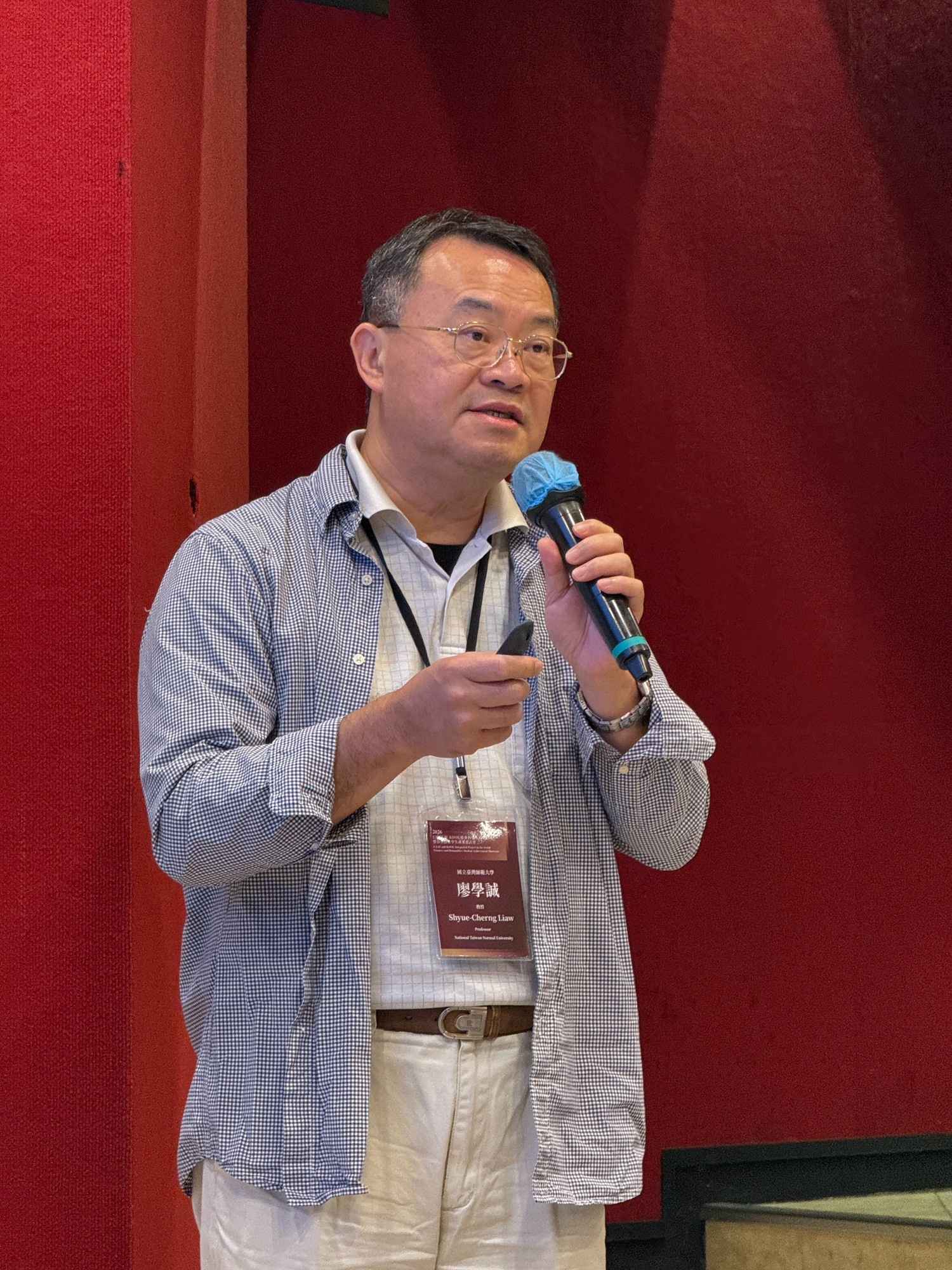
Professor Shyue-Cherng Liaw's team shared the outcomes of a field-based learning program in Japan's Kyushu region. Through site visits and academic exchanges, students examined environmental governance, cultural landscapes, local industries, and urban development.
The program included visits to Takeo City Library, the Nakashima River in Nagasaki, Arita, Niji-no-Matsubara, and Mojiko, along with academic exchanges at Nagasaki University and Kyushu University. These experiences allowed students to explore regional revitalization, cultural heritage preservation, and sustainable environmental management through firsthand observation.
NTNU also introduced its 2026 International Sustainability Winter Program, held from January 20 to 29. The program brought together faculty members and students from Taiwan, the United Kingdom, and Japan to discuss sustainability challenges facing island nations.
Professor Mucahid Mustafa Bayrak of NTNU and Professor Yuichiro Fujioka of Kyushu University jointly taught a course on sustainable development in East Asia through Collaborative Online International Learning (COIL). Combining virtual international collaboration with academic exchange, the course broadened students' understanding of regional sustainability issues.
Cross-Cultural Learning and Legal Studies Expand International Perspectives
A research team led by Professor Shenglin Elijah Chang, Associate Dean of the College of Design and Innovation at National Taiwan University (NTU), combined COIL with reciprocal field visits to explore sustainable well-being through cross-cultural learning.
Students participated in field activities in Dazaifu, Fukuoka; Jiufen and the Dinghu community in Yangmingshan, Taiwan; and Hamahiga Island in Okinawa. By bringing their creative projects into local communities, students explored relationships among regional identity, community participation, and sustainable development. The project extended international exchange beyond classroom learning into collaborative research and design.
Another team, led by Professor Sieh-chuen Huang, Associate Dean of NTU's College of Law, promoted Taiwan–Japan academic dialogue through workshops at Kyushu University, jointly taught courses, and visits to the Naha District Court, where participants observed court proceedings and exchanged perspectives with judges.
Discussions covered legal practice and education in Taiwan and Japan, as well as environmental, social, and governance (ESG) frameworks and policy instruments. These activities provided opportunities for students and faculty to compare legal systems and develop broader international perspectives on contemporary legal issues.
The symposium highlighted the growing collaboration between Taiwanese and Japanese universities through joint research, academic exchanges, and interdisciplinary learning. As the coordinating university for the UAAT Social Sciences and Humanities integrated project, NTNU will continue strengthening international partnerships and expanding research and learning opportunities for students and faculty.